Skip to content

Art e-Facts 48


In 1938, Willem de Kooning started his first series of Women, which would become a major recurrent theme. During the 1940s, he participated in group shows with other artists who would form the New York School and become known as Abstract Expressionists. De Kooning’s first solo show, which took place at the Egan Gallery, New York, in 1948, established his reputation as a major artist; it included a number of the allover black-and-white abstractions he had initiated in 1946. The Women of the early 1950s were followed by abstract urban landscapes, Parkways, rural landscapes, and, in the 1960s, a new group of Women.

FOR INFORMATION ON FINE ART COURSES IN EDINBURGH PLEASE CLICK HERE


Art e-Facts 47


Carsten Nicolai is an artist and musician who lives and works in Germany. His work operates in the space in between art and science. His work operates to a very exacting minimalistic aesthetic utilising traditional sculptural and installation techniques in combination with sound and light elements.

A core influence of his practice has been sound and its inherent properties this lead to the formation of noton.archiv fur ton und nichtton (later to become raster-noton after joining with the record label Rastermusic). The record label focuses on releasing editions uniting sound and art design with a strong attention paid to scientific sequences. Carsten Nicolai also releases experimental electronic music under the title of Alva-Noto including recent collaborations with minimalist pianist Ryuichi Sakamoto and Japanese sound artist Ryoji Ikeda.

http://www.carstennicolai.de
http://www.alvanoto.de
http://www.raster-noton.de

Courtesy: onezeroprojects

Art e-Facts 46


In a career spanning more than six decades, the work of Louise Bourgeois encompasses the fields of sculpture and installation, painting, drawing, prints and illustrated books, which have been influenced strongly by autobiographical and psychological experiences as well as Surrealism. Born in Paris, Louise Bourgeois studied at various art schools and assisted in the tapestry restoration business of her father where she made drawings for restorations. With her husband, an art historian specializing in tribal arts, she moved to New York in 1938 and continued her studies at the Arts Students’ League in New York, before developing her complex and unique artistic work.

http://www.galeriepieceunique.com/infoframes/bourgeois.htm

FOR INFORMATION ON FINE ART COURSES IN EDINBURGH PLEASE CLICK HERE

Art e-Facts 45


Although born in Dublin in 1941 Michael Craig-Martin grew up and was educated in the United States of America studying Fine art at Yale University School of Art before moving to London in 1966.

Professor of Fine Arts in Goldsmiths College, London, in the 1980s and 1990s, Craig-Martin was a key influence on the YBA generation of artists—Tracey Emin, Damien Hirst, Gary Hume, Sarah Lucas, and many more.

Craig-Martin’s work includes sculptures, paintings and print-editions. Since the 1990s his paintings, wall paintings, on-site-installations and prints have represented colourful, clear compositions depicting an inventory of graphically outlined items of contemporary life.

http://www.bbc.co.uk/dna/collective/A3096092
http://arts.guardian.co.uk/critic/feature/0,,719505,00.html

Art e-Facts 44


Sol LeWitt helped establish Conceptualism and Minimalism as the dominant art movements of the postwar era. A patron and friend of colleagues young and old, he was the opposite of the artist as celebrity. He tried to suppress all interest in him as opposed to his work; he turned down awards and was camera-shy and reluctant to grant interviews.

Sol LeWitt was born in Hartford, Connecticut 1in 1928 and studied at Syracuse University, receiving a BFA.

He began making simple geometric paintings in series, which became the basis of his art. In the early 1960’s, he extended these ideas to three- dimensional wooden forms or “structures.” Bothered by their inconsistencies, he stripped the wooden skin off these structures to reveal the sculpture’s skeletal core. He also developed a prescribed ratio that he followed, which determined the amount of open space versus the amount of support structure in each piece. This focus on highly conceptual relationships, with increasing complexity and variation, has continued to guide his work as a sculptor.

In the 1960’s, LeWitt made open modular white cubes that are seminal works in the history of Minimalism. Using mathematical systems LeWitt emphasized the conceptual basis of art in direct opposition to the expressiveness and gesture identified with the work of the Abstract Expressionists.
The cube provided a particularly rich form for this kind of exploration and has been the focus of his attention for decades. He has been equally concerned with expanding the parameters of two-dimensional work, creating drawings and paintings that are applied directly to the wall and that transform entire architectural environments.
In the 1970’s, LeWitt introduced architectural scale works, Wall Drawings, based on verbal proposals or systems suggested by LeWitt but executed by others. In the 1980’s the Wall Drawings became more expressive with sensual color applied to various permutations of geometric shapes. In the past decade, LeWitt has used undulating waves and swirling bands of color that are hot, bold and highly decorative.

http://www.guardian.co.uk/obituaries/story/0,,2053989,00.html

http://arts.guardian.co.uk/news/obituary/0,,2053692,00.html

http://www.nytimes.com/2007/04/09/arts/design/09lewitt.html?ref=design

http://www.telegraph.co.uk/news/main.jhtml?view=DETAILS&grid=&xml=/news/2007/04/10/db1001.xml

http://news.scotsman.com/obituaries.cfm?id=552912007

http://www.iht.com/articles/2007/04/09/news/obits.php

Courtesy: D. McLachlan

Art e-Facts 43


Since the late 1970s, American artist Vitto Acconci has designed architectural and installation works for public spaces, however he was originally a poet of the New York school before moving towards performance, sound, and video work by the end of the 1960’s.

Acconci changed direction in order to “define his body in space, his early performances—including Claim (1971) and Seedbed (1972)—were extremely controversial, transgressing assumed boundaries between public and private space, and between audience and performer.

Positioning his own body as both the subject and object of the work, Acconci’s used early video recordings to record actions taking advantage of the self-reflective potential of the media. Consistently exploring the dynamics of intimacy, trust, and power, the focus of Acconci’s projects gradually moved from his physical body (Conversions, 1971) toward the psychology of interpersonal transactions (Pryings, 1971), and later, to the cultural and political implications of the performative space he set up for the camera (The Red Tapes, 1976).

http://www.ubu.com/film/acconci.html

Art e-Facts (supplemental)

DEAR READERS DUE TO REASONS WELL WITHIN MY CONTROL Art e-Facts WILL APPEAR ONLY AS AND WHEN THE NECESSARY RESOURCES ARE AVAILABLE BETWEEN NOW AND THE 16TH OF APRIL WHEN I RETURN FROM HOLIDAY.

MEANTIME WHY NOT LEAVE COMMENT ON THE MANY PREVIOUS ENTRIES AND OR SEND IN YOUR VERY OWN FACT OF THE DAY.

BEST WISHES

ED

Art e-Facts 42


Edward Kienholz emerged as an artist at the same time as Jasper Johns and Robert Rauschenberg in the US and was part of a generation of artists born between two World Wars.

His practice was informed by the emerging Beat Culture of the late 1950s and early 1960s in California, and was central to the development of the early Los Angeles gallery scene. In 1972 Kienholz developed a life long collaborative partnership with Nancy Reddin, who continues to make work since his death in 1994.

Kienholz sculpture takes the form of life-size environments; walk-in ‘installations’ incorporating everyday objects which critique modern society, and the political climate of the day. Compelled by a deep sense of moral justice and a provocative sense of humour, these uncompromising artworks continue to have a searing energy and pose a direct challenge to the viewer.

Art e-Facts 42

[youtube=http://www.youtube.com/watch?v=-o5i0eF2AF4]

Chris Cunningham is internationally known for creating and directing music videos for artists such as Björk, Madonna, Portishead and Aphex Twin. In 1989, aged only 19 Cunningham was working on the satirical sketch show Spitting Image, sculpting character models, he later went to work as Stanley Kubricks head of animatronics and special effects for the feature film A.I.

In 2000 Cunningham exhibited Flex:

“…….a video which aims to awaken one’s senses through the sound of electronic music, unforgettable images of both sexual violence and breathtaking serenity”. Anthony d’Offay Gallery

Flex was shown for the first time in: Apocalypse: Beauty and Horror in Contemporary Art at the Royal Academy in London.

Art e-Facts 41

In 2006 the American artist Paul McCarthy transformed a London warehouse into a massive installation inspired by one of the most popular Disneyland rides Pirates of the Caribbean (and subsequently the Hollywood film).
‘The Caribbean Pirates Project’ was the result of a four year collaboration with his son Damon and consisted of drawings, sculptures, video works and large installations. The work was the centrepiece of his exhibition ‘La La Land Parody Paradise’ at the Whitechapel. The work has been described as being influenced by global capitalism as epitomised by the Disney corporation, and the US invasion of Iraq.
for further information click here

Art e-Facts 40


In 2003 the Imperial War Museum commissioned the British artist Steve McQueen to produce an official portrait of the Iraq conflict.
The former Turner prize winner (1999) is perhaps best known for his gallery based black and white silent films (the most famous being the restaging of the Buster Keaton stunt of the falling house in Deadpan.(1997).
McQueen was never likely to produce a standard representational work and so it was when in February 2007 the final work was unveiled at Manchester Central Library in the run up to the Manchester International festival.
The work is a collection of 100 (approx) stamps showing personal photographs of British soldiers killed in the conflict. McQueen worked with the full support of the families of the soldiers. The work faced strong opposition from the Ministry of Defence and the Royal Mail chairman Allan Leighton has refused to allow the stamps to be a real commemorative issue.

For the background and full story:

www.24hourmuseum.org.uk/nwh_gfx_en/ART17087.html

http://news.independent.co.uk/uk/this_britain/article2308407.ece

http://news.independent.co.uk/people/profiles/article2308397.ece

http://arts.guardian.co.uk/art/visualart/story/0,,2031797,00.html

Art e-Facts 39


Alison Watt was born in Greenock in 1965 and studied at the Glasgow School of Art from 1983 to 1988. She gained early recognition as a painter, winning the National Portrait Gallery’s annual award as a student, then a commission to paint the Queen Mother’s portrait in 1989. Inspired by the nineteenth century painter Ingres, Watt’s portraits often focus upon the drapery which is traditionally used as a backdrop for the sitter. In her recent large-scale works, the human figure is entirely absent, allowing the texture and folds of the fabric to take centre stage.

FOR INFORMATION ON FINE ART COURSES IN EDINBURGH PLEASE CLICK HERE

Art e-Facts 38


Born in Port Arthur, Texas in 1925, Robert Rauschenberg imagined himself first as a minister and later as a pharmacist. It wasn’t until 1947, while in the U.S. Marines that he discovered his aptitude for drawing and his interest in the artistic representation of everyday objects and people. After leaving the Marines he studied art in Paris on the G.I. Bill, but quickly became disenchanted with the European art scene. After less than a year he moved to North Carolina, where the country’s most visionary artists and thinkers, such as Joseph Albers and Buckminster Fuller, were teaching at Black Mountain College. There, with artists such as dancer Merce Cunningham and musician John Cage, Rauschenberg began what was to be an artistic revolution. Soon, North Carolina country life began to seem small and he left for New York to make it as a painter. There, amidst the chaos and excitement of city life Rauschenberg realized the full extent of what he could bring to painting.

Art e-Facts 37


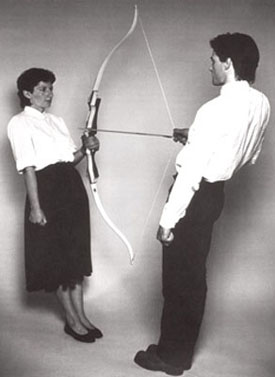
In 1976 Marina Abramović and Ulay began a decade of collaboration, during which the main concepts they explored were the ego and artistic identity.

Each performer was interested in the traditions of their cultural heritages and the individual’s desire for ritual. Consequently, they decided to form a collective being called “the other,” and spoke of themselves as parts of a “two-headed body.” They dressed and behaved like twins, and created a relationship of complete trust.

Rather than concern themselves with gender ideologies, Abramović/Ulay explored extreme states of consciousness and their relationship to architectural space.

In discussing this phase of her performance history, Abramović has said: “The main problem in this relationship was what to do with the two artists’ egos. I had to find out how to put my ego down, as did he, to create something like a hermaphroditic state of being that we called the death self.”

To create this “Death self,” the two performers devised a piece in which they connected their mouths and took in each other’s exhaled breaths until they had used up all of the available oxygen. Precisely seventeen minutes after the beginning of the performance they both fell to the floor unconscious, their lungs having filled with carbon dioxide. This personal piece explored the idea of an individual’s ability to absorb the life of another person, exchanging and destroying it.

In 1988, both artists walked the Great Wall of China, starting from the two opposite ends and meeting in the middle. As Abramovic described it: “That walk became a complete personal drama. Ulay started from the Gobi desert and I from the Yellow Sea. After each of us walked 2500 km, we met in the middle and said good-bye.”

This marked the end of their relationship.

Art e-Facts 36

Martin Boyce came to prominence during the 1990s and is one of Scotland’s most internationally acclaimed artists. His work takes inspiration from the collapse of utopian ideals that once surrounded mid-century modernism and modernist design. In past works, Boyce has re-situated iconic modernist furniture in anti-heroic postures, and in Double Black Disaster (1999), an Eames chair is put to work as a door jam.

Boyces’ work can currently be seen at The Modern Instutute in Glasgow until March 30th and later this year in Sculpture-Projects, Munster 07.


Art e-Facts 35


‘The one thing to say about art is that it is one thing. Art is art-as-art and everything else is everything else. Art-as-art is nothing but art. Art is not what is not art.’

This opening statement from the article ‘Art as Art’ by American Abstract painter Ad Reinhardt clearly advocates the complete seperation of art from life. He goes on to suggest that art should be:

‘…non-objective, non-representational, non-figurative, non-imagist, non-expressionist, non-subjective.’

This advocation of pure abstraction provided a conceptual platform for the ‘pure’ abstract paintings Reinhardt had been working on since the early 1950’s.

The article was first published in Art International, VI, no 10, Lugano, December 1962.

FOR INFORMATION ON FINE ART COURSES IN EDINBURGH PLEASE CLICK HERE

Art e-Facts (supplemental)

THE EDITOR WOULD LIKE TO APOLOGISE TO THOSE WHO NOTICED THE LACK OF FArt e-Facts OVER THE WEEKEND. THIS WAS DUE TO ILL HEALTH.

HOWEVER AS A RESULT THE EDITOR HAS DECIDED THE WEEKENDS ARE BETTER SPENT:

  • IN THE STUDIO MAKING WORK.
  • VISITING GALLERIES.
  • READING AND NOT REMEMBERING.
  • HAVING FAMILY FUN DAYS.
  • BEING IN BED.
  • BEING IN BED BEING ILL.

THEREFORE FACT OF THE DAY WILL ONLY APPEAR MONDAY TO FRIDAY.

Art e-Facts 34

Downpresserer by Graham Fagen was produced following a research trip to Jamaica in 2006.

The work was commissioned as part of a year-long programme of events run by Glasgow City Council to mark the bicentenary anniversary of the Abolition of the Slave Trade Act, and part of the exhibition tells the story of the attempts of Robert Burns, who was appalled by the slave trade, to become a bookkeeper on a plantation in Jamaica.

Downpresserer exemplifies Fagen’s ongoing interest in combining elements of Scottish national heritage (such as the writings of Robert Burns) with that of the West Indies (Jamaican reggae). The title of the show, comes from the song Downpresser Man by the celebrated Jamaican musician Peter Tosh (1944-87). A photographic portrait of Tosh’s mother, Mama Tosh, is included in the exhibition alongside a video installation of an impromptu performance of Robert Burns’s poem Slave’s Lament. Fagen made both these works on a research trip to Jamaica in 2006.

Downpresser can be seen at Glasgows Gallery of Modern Art until May 28th.

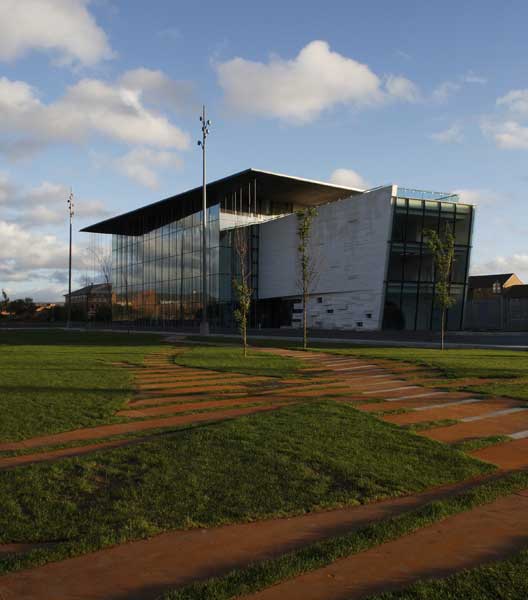
MIMA: Middlesbough Insitute of Modern Art

mima_eaa060207_marcusginns.jpg

The Middlesbrough Institute of Modern Art (MIMA) opened its doors to the public on the 27th of January 2007 with its inaugural exhibition Draw. The exhibition features a number of conversations around the legacy of drawing and features seven modern masters recognised for their contribution to 20th century art, with seven living artists.

The resulting dialogues created around the practice of drawing encourage us to engage with the work of one artist through the ideas of another and to expand our understanding of drawing.

The exhibition demonstrates MIMA’s commitment to modern as well as contemporary art with a collection and exhibition policy that focuses on art from 1900 to the present.

Draw will run at MIMA until April 22nd

www.visitmima.com

MIMA was designed by: Erick van Egeraat Associated Architects

Art e-Facts 32


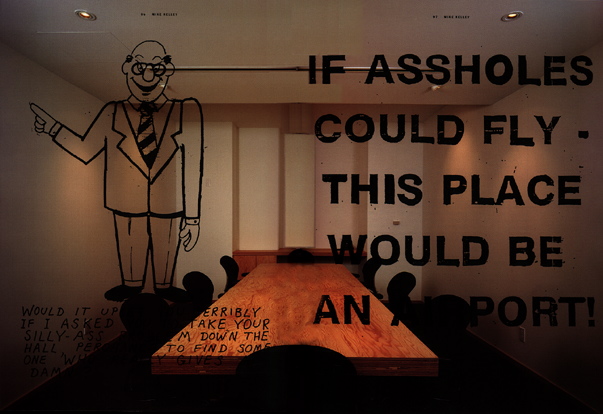
Mike Kelley was a founding member of the band ‘Destroy all Monsters’ and was replaced by then ex Stooges guitarist Ron Ashton. He left the Detroit music scene in 1978 and moved to LA to pursue his interest in art. He is now considered to be one of the most influential artists to come out of the US art scene in the 1980s. However, he has continued to parallel his art career with his interest in sound and has collaborated musically with (amongst others) the artists Paul McCarthy and Tony Oursler.

http://www.mikekelley.com/