The following review was first published by CAPetc… Year 1 student Beth Cockerline on her personal blog on 15th February 2025. We are delighted to re publish the post on the CAPetc… website.
Joan Snyder, exhibits her first retrospective in the UK with Theddeus Ropac. Covering Snyder’s 60 year career, a vicissitude of work explores abstract expressionism with a unique and spirited amalgamation of the autobiographical.
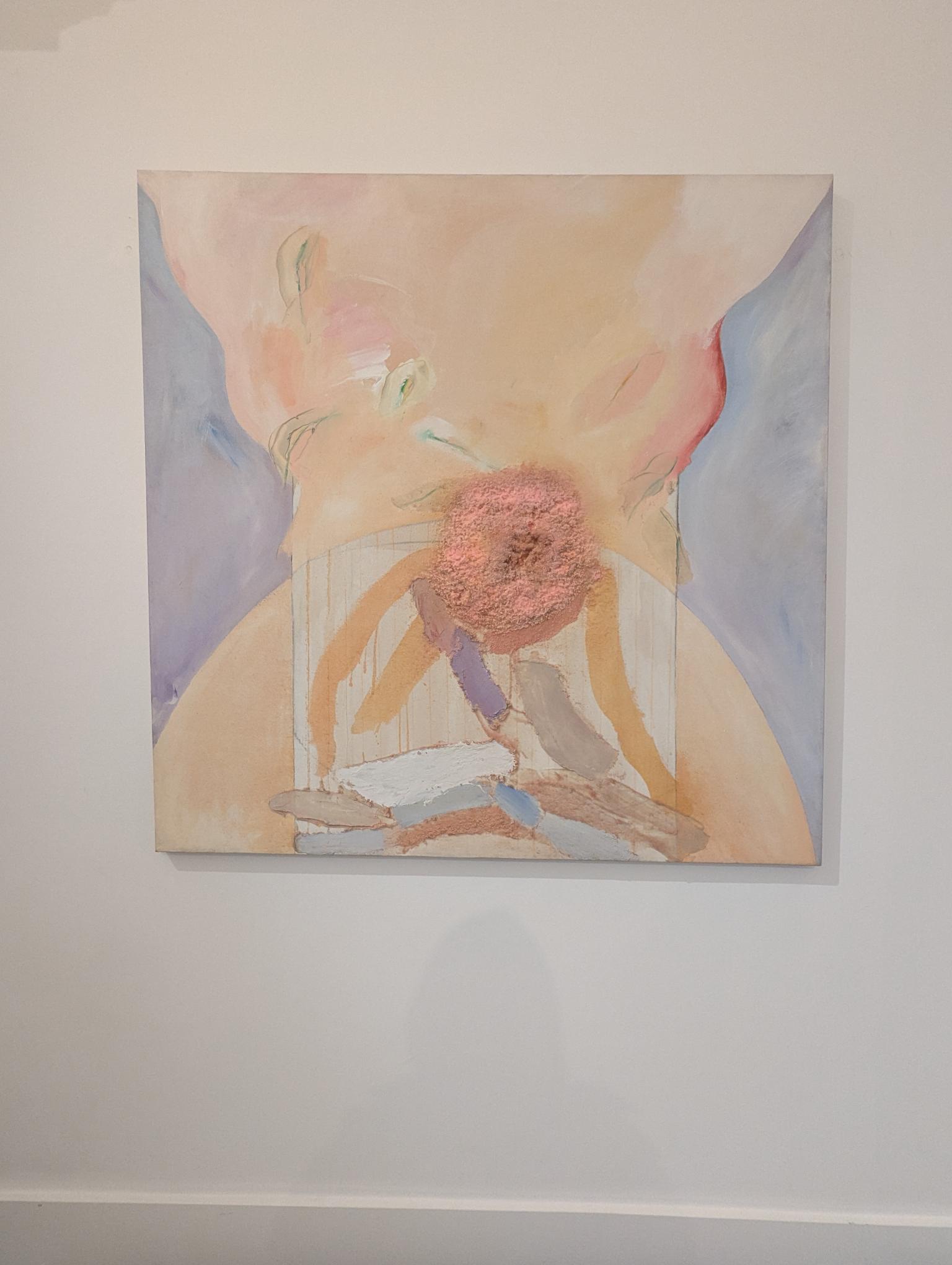
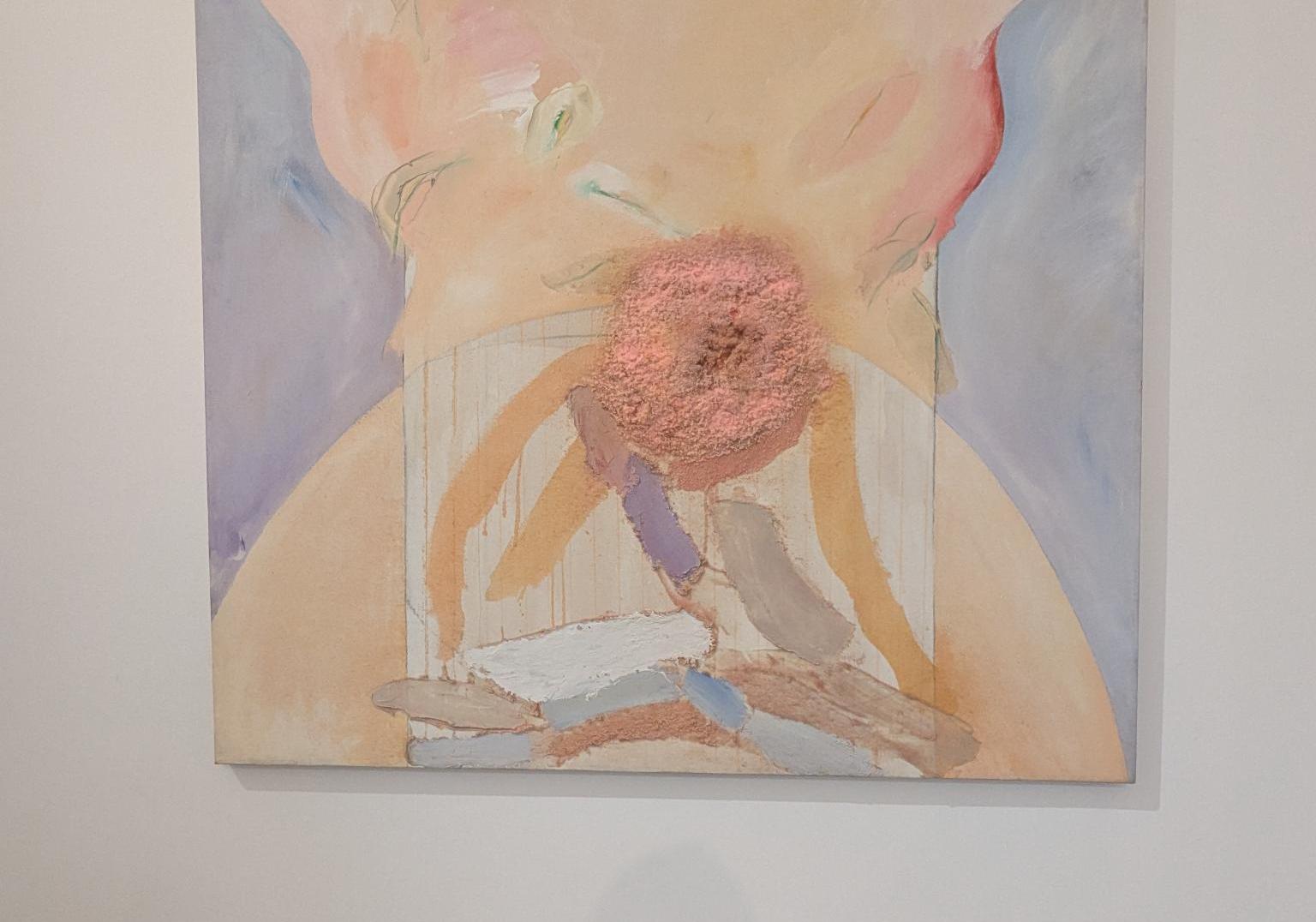
Facing the sweeping staircase, of the floodlit gallery, I was instantly drawn in by the light and ephemeral abstraction of Fresh Flock Painting with Strokes and Stripes 1969. On first appearance a delicate depiction of the female figure, Snyder’s joy of the flesh is palpable in a subtle blending of the paint to create form and structure. The flame hot pink of a wound reminds us of the vulnerability of the body and as the eye travels down the composition the hourglass figure appears emptied out: sharing every trauma and horror on the canvas. The flocking, a tactile, oozing wound or growth? A pulsating organ? A centrepiece reaching out to us from the violet blue background which floats the body in space celebrating all the agonies and beauty of the flesh.
Flanking this piece are two similarly sensitive works, recalling Frankenthalerian soak-staining (Veiled Strokes 1969) and an exciting, but economical use of impasto against glowing areas of pastel. Despite invoking elements of colour field from the likes of Rothko, Snyder highlights the singularity of her work in the intertwining of the autobiographical in her work: “It’s an undecipherable abstract language. It’s my language that is speaking and my soul that is being bared. It is my pleasure and pain…”
A Letter to My Female Friends, 1972, and other work of this period speak in a very distinctive language of truncated, heavy marks, cut off before they’ve had the chance to convey their full story; a stumble of stuttered utterances recounting an incomprehensible tale. In other works, Wild Strokes, Hope 1971, given more room to breathe and converse, the marks tell a more intriguing story: a marbled universe of dark blue enrobed in wax; a diversity of tone; a stain here, a splatter there; a lightness of pigment lifting the darker tones.
When Snyder experiments with more representational imagery, the work wanes. In, To Transcend/ The Moon 1985 fat glutenous ripples of pure black, white and peacock blue suffocate one half of the canvas while incongruous sweeps of astral gold and vertical graphic slices of cracked, deep purple, blue and green eclipse the other half.
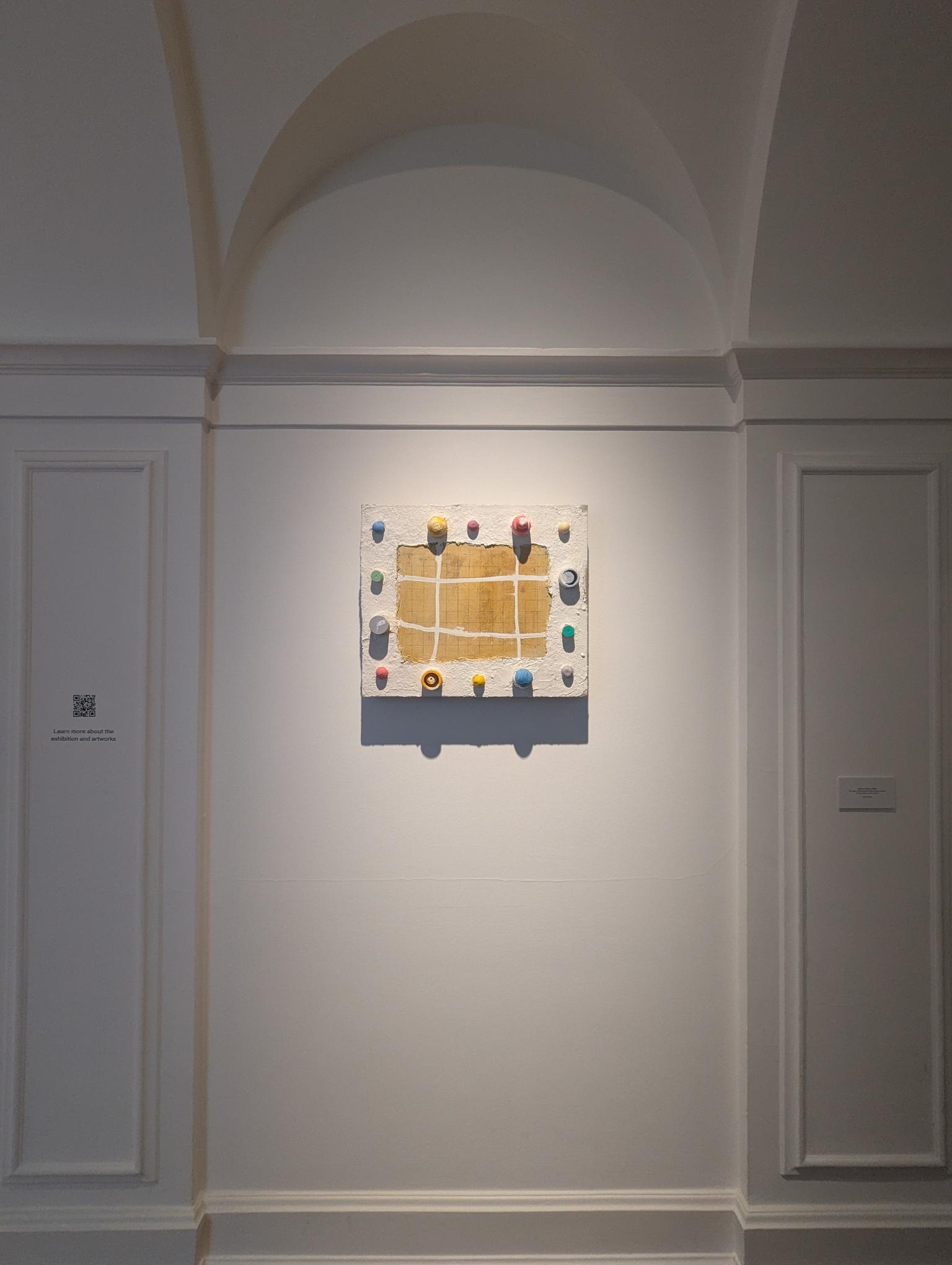
However, exploring her later work Snyder returns to abstraction and a playfulness which is both joyful and experimental. It’s hard not to grin at the space age knobs and naivety of Summer Painter 1994 and in other works, Theddeus Ropac’s use of the architectural features, fully embrace and highlight the nuance of Snyder’s work.
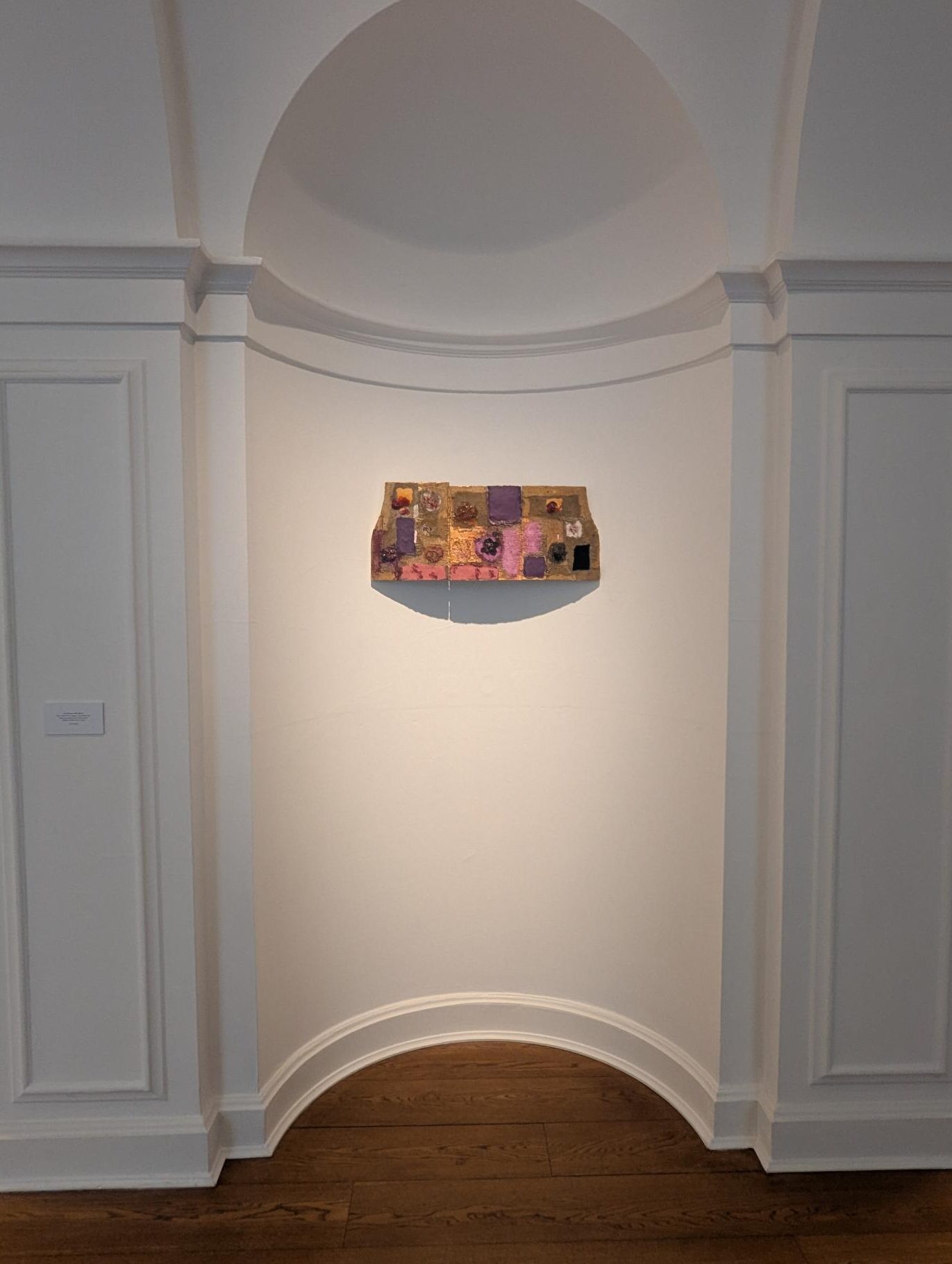
The final room of the exhibition, and presentation of Snyder’s most recent work, is crammed with joyful abandon- a celebration of nature, experience and life! The recurring motif of the organic ‘pond’ is a dark abyss (Roses for Souls), a portal into another realm and a mystical lagoon luring unsuspecting viewers to a world inhabiting sirens (Come to the Pearl Pond). The energy and confidence of Snyder’s work is palpable and the use of collaged, 3D elements speaks to her earlier sculptural work. While the work can drift into the quaint and sentimental at times, it bounces back with gusto in Man Leaping- a rapturous and flamboyant triumph of freedom.
Body and Soul is an exquisite journey through Snyder’s oeuvre highlighting an energy and passion for the materiality and infinite possibilities of paint that is unequivocal.



 Contemporary Art Practice etc...