
Part of the 2017 Alchemy Film & Moving Image Festival in Hawick Rachel Maclean discusses the 2017 Scotland In Venice commission.
Art e-Facts
Luc Tuymans guilty!?
The Art Newspaper reported yesterday:
The Belgian artist Luc Tuymans was found guilty of copyright infringement in a legal dispute over a portrait he created in 2011. A civil court in Antwerp ruled on 15 January that Tuymans’s painting A Belgian Politician—a dramatically cropped image of the MP Jean-Marie Dedecker—borrowed too heavily from a photograph taken one year earlier by Katrijn Van Giel, a photojournalist for the Flemish newspaper De Standaard……
Read the full article here: http://theartnewspaper.com/articles/Tuymans-found-guilty-in-copyright-case-involving-political-portrait/36825
Commentary from todays Guardian by Adrian Searle: http://www.theguardian.com/artanddesign/2015/jan/21/luc-tuysmans-katrijn-van-giel-dedecker-legal-case
Soundweaving
Hungarian Artist Converts Folk Embroidery Patterns into Paper Scores for Music Boxes
More here: http://www.thisiscolossal.com/2015/01/soundweaving/
Art School, Smart School
Is this the end of the British art school?
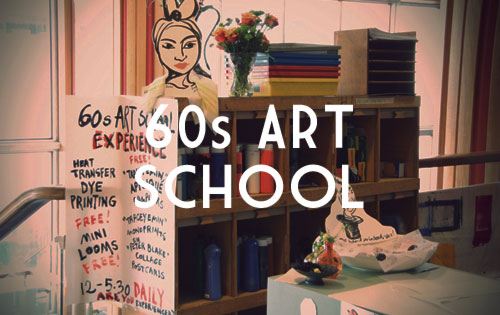
Last week BBC Radio 4 aired the programme Art School, Smart School which featured contributions from Brian Eno, Tracy Emin and Grayson Perry as they lament the creative freedom afforded by the British post war art school experience and share fears about the increasing commodification and the increasing need to legitimate study y demonstrating market relevance. You can listen to the programme by clicking the link below.
http://www.bbc.co.uk/programmes/b04pr1w2
Art School, Smart School, was produced by Isabel Sutton, and first broadcast on BBC Radio 4 on 22nd November at 8pm
As well as producing the programme Isobel Sutton has also written the following article for the New Statesman first published on the 20th Nov 2014.
When the Great Exhibition opened its doors in 1851, Britain’s reputation as the workshop of the world was on the wane. Few visitors would have known it at the time, but the exhibition signified the high watermark of British manufacturing. French design and Prussian engineering were already edging ahead. In 2012, London hosted another event designed to present Britain to the world – one which referenced the upheaval of the Industrial Revolution by featuring towering smoke stacks and beating drums.
Danny Boyle’s Olympic opening ceremony represented British history as a creative blossoming that started in the nineteenth century but seemed to reach its zenith in the twentieth century when fashion, film and pop music boomed. And yet it seems to me that Boyle’s Olympic opener – just like the Great Exhibition – was telling a story about Britain that had already ceased to be true. The circumstances which made it possible for artists to thrive in Britain during the twentieth century are rapidly disappearing. And perhaps one of the most essential changes is in our art schools.
Name any one of the UK’s most famous designers or musicians, never mind artists, and they are likely to have set foot in an art school at one time or other: David Bowie, Pete Townsend, Brian Eno, Vivienne Westwood, John Galliano. I could go on and on. Economist Hasan Bakhshi of innovation charity Nesta says that he is frequently asked about how we run our art schools by educationalists abroad. Art schools are perceived by many as the key to our creative success.
Yet art schools have changed dramatically over the last 20–30 years, causing many to question whether they will, in the future, cultivate the innovators we so badly need. Art schools used to be havens for students who, for whatever reason, had not found their niche in the traditional academic system. Now prospective art students very often have to prove their academic credentials to compete for a place at the most prestigious colleges. Once on the course, art students have to submit an increasing volume of written work, arguably a distraction from practical skills and craft.
Tuition fees have made higher education in Britain more expensive than anywhere else in Europe, and art schools are no exception. This means that the social and economic mix is disappearing (students from poorer backgrounds being less inclined to take out a loan for a non-vocational subject such as fine art). What’s more, art schools are going out of their way to attract foreign students for the extra income they bring. Unsurprisingly, there is deep concern among many artists and teachers that the age of the art school is – to quote Sir Christopher Frayling – “over”.
Frayling was, until 2009, dean of one of Britain’s most venerable art schools, the Royal College (RCA). But as I walked its corridors with him recently, he admitted that even this renowned institution has suffered from the same damaging developments as art schools around the country: workshops for ceramics, printing, and metalwork have been replaced by computer rooms, digital expertise is prioritised before craft; student numbers are rocketing and teaching hours are sinking.
Read the full article on the New Statement website:
http://www.newstatesman.com/culture/2014/11/end-british-art-school
New AIRetc: Julie Duffy


The AIRetc…. Contemporary Art Team are delighted to welcome our new Artist In Residence, Julie Duffy. Julie, who graduated from the HND at at the former Telford College in 2008 went on to gain a 1st class BA Hons Degree in Fine Art at Duncan of Jordanstone College of Art & Design (DJCAD), is our eighth resident in the AIR studio.
Since graduating from DJCAD in 2011 Julie has developed new work and has exhibited regularly throughout Edinburgh including solo exhibitions at Summerhall and group shows at Edinburgh Sculpture Workshop. As well as developing her solo practice in sculpture Julie has more recently been developing collaborative practices with Hayley Mathers who as well as being a former AIRetc…. is also a graduate from DJCAD.
Julie is also an active member and former studio holder at Edinburgh Sculpture Workshop where she has developed a curatorial role as a member of the 2 person TANK committee which is responsible for the programming of the TANK project and exhibition space at ESW.
Julie has already made a fantastic contribution to the HND CAP course by getting involved with studio / project crits and we are all really looking forward to the working closely with her over the next few months.
Julie will be blogging throughout her time as AIR and as always you can follow her progress on the AIRetc website. In the meantime you can find pout more about Julie and her practice by visiting her website:
 Contemporary Art Practice etc...