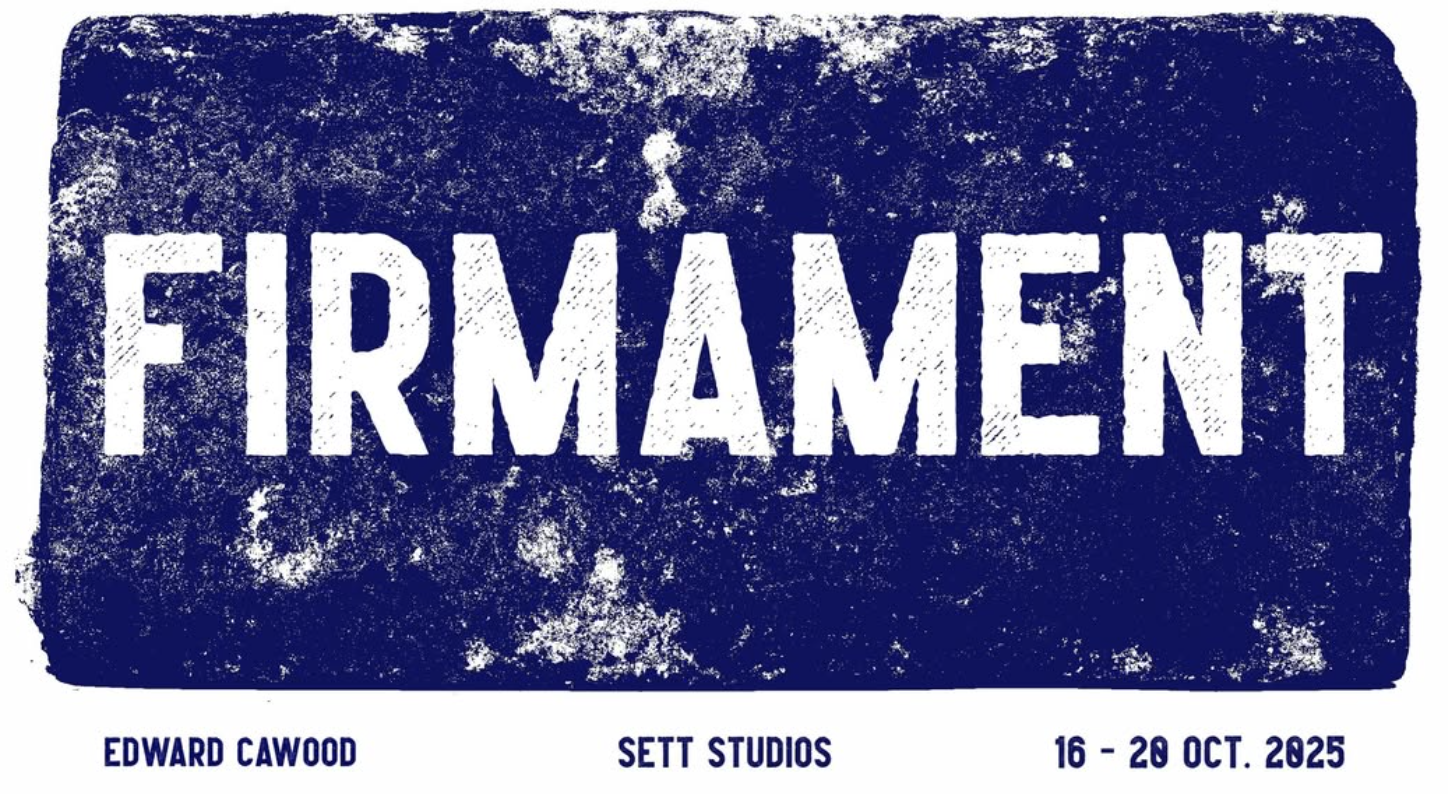
Opening at SETT Studios on Thursday, 16th October 2025 Cawood’s latest presentation draws on several years of research and creative experimentation to produce work that delves into the layered industrial history of Prestongrange — once one of Scotland’s most significant brick and tile works, and home to early coal mining operations dating back to the 12th century.
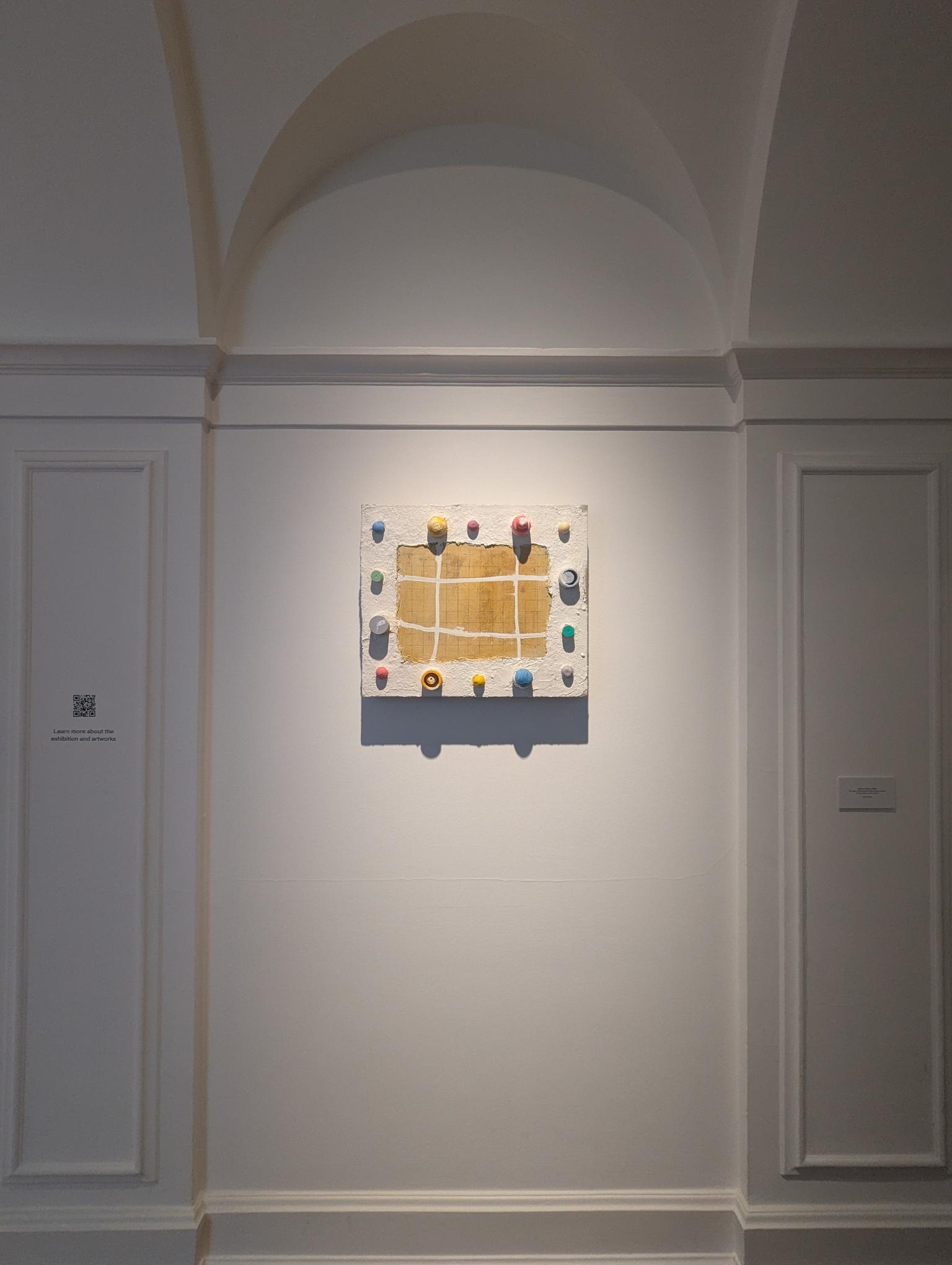
The exhibition takes its title from the Latin firmamentum, meaning “a firm object” or “celestial barrier.” This dual sense of strength and mystery resonates through Cawood’s practice, which merges meticulous, archival study with deeply material processes. His works — ranging from “textual objects” to experimental photographic pieces on tile — embody a physical and conceptual dialogue with the site’s past. Each piece is the result of labour-intensive techniques that mirror the endurance and transformation embedded in the landscape itself.
Firmament represents the culmination of Cawood’s investigations into site, value, and industrial heritage, revealing a body of work that is both contemplative and tactile. Visitors will encounter a collection of pieces that evoke the textures of history, reimagined through the lens of contemporary art. Notably, the exhibition also introduces new, never-before-seen works, offering a first glimpse into the artist’s latest explorations.
The opening event takes place on Thursday, 16th October, with two sessions: a bookable Quiet Opening from 3pm to 5.30pm, designed to provide a relaxed, accessible experience, and the Main Opening from 6pm to 8pm.
Following the launch, the exhibition will be open for public viewing on:
17th October: 3pm – 8pm
18th – 20th October: 12pm – 5pm
A special event on 19th October (2.30pm – 4pm) will feature a bookable Writing Workshop with Beth Cockerline, inviting participants to creatively respond to the themes and atmosphere of Firmament.
Through Firmament, Edward Cawood transforms the remnants of Scotland’s industrial past into meditative reflections on endurance, decay, and the stories embedded in place — bridging history, art, and material memory in one evocative exhibition.
hubCAP Gallery is an Artist Run Exhibitions and Events organisation run by a rotating committee of participants of the HND Contemporary Art Practice (CAP) course at Edinburgh College Granton Campus. ‘Frimament’ is the first off campus exhibition by hubCAP.
SETT Studios is an artist-run studio with dedicated gallery space in Leith, Edinburgh.
Further information including accessibility information is available via the hubCAP Gallery website:
“The crucial thing about entropy- it always increases over time. It is the natural tendency of things to lose order. Left to its own devices, life will always become less structured. Sandcastles get washed away. Weeds overtake gardens” 2
In this unprecedented time of change and turmoil perhaps we need to embrace entropy? Perhaps we need to pause and let things be washed away, slow down and let the weeds take over? Synonymous with immersive installations, Mike Nelson recently spent two months in homage to this decay; in an act of service and love to the entropy of a block of South London flats. In a “reverse DIY”3 feat, Nelson has created a hauntingly familiar work, Humpty Dumpty, a transient history of Mardin earthworks, low rise, at Fruitmarket gallery in Edinburgh. The exhibit, which coincides with Edinburgh Arts Festival, then comes full circle and counters with the inquisitive exploration of the rebirth of a South-Eastern Turkish city, Mardin.
If you grew up in the 70s-90s, in a British council house, Low Tide is akin to attending the funeral of a former life. I’d suggest you start your journey here, in the upper gallery and Warehouse,where Nelson sensitively captures the gritty detail with nostalgic reminiscence, of the now extinct, Heygate Estate, through photography, sculpture and installation.
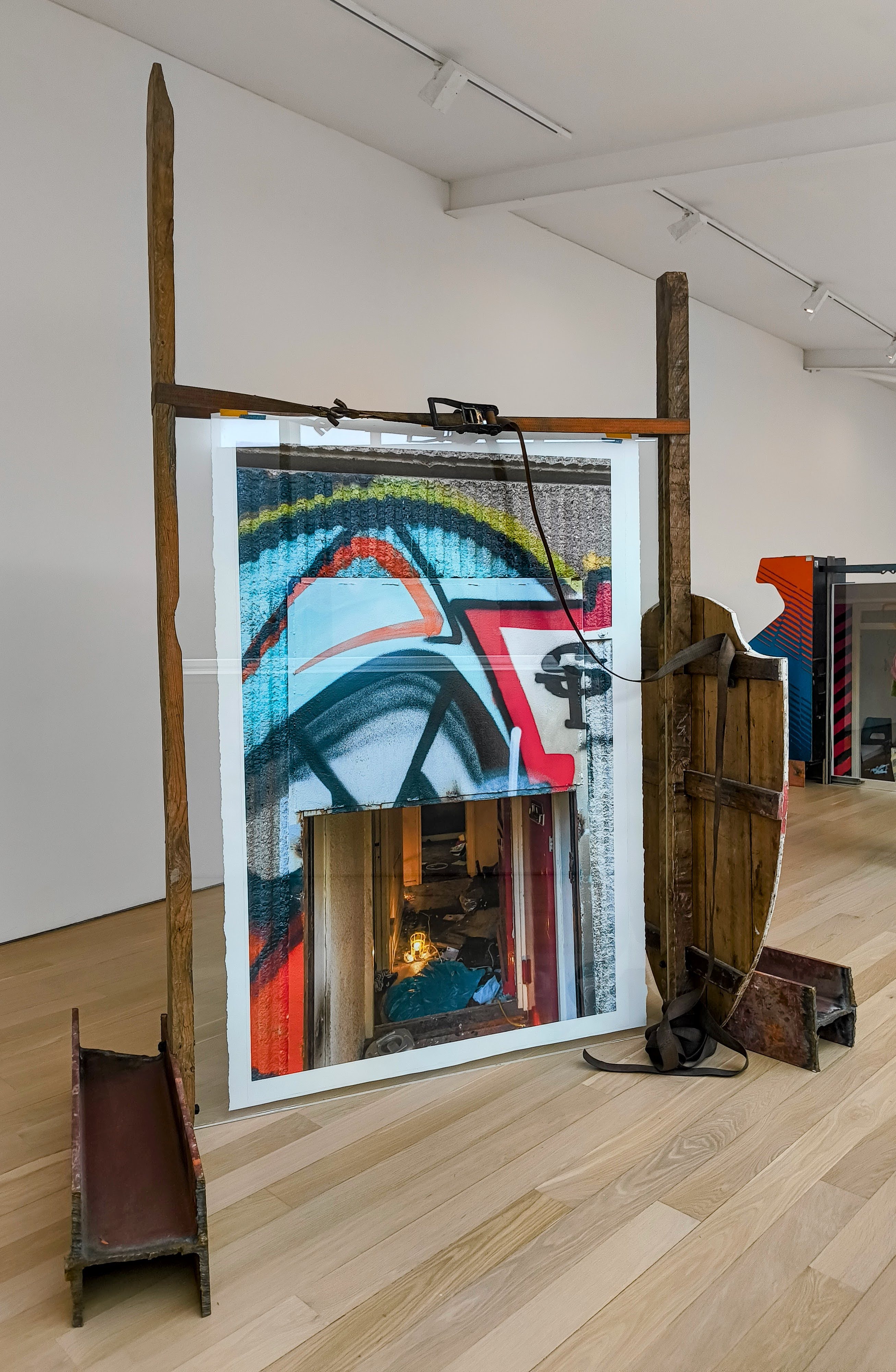
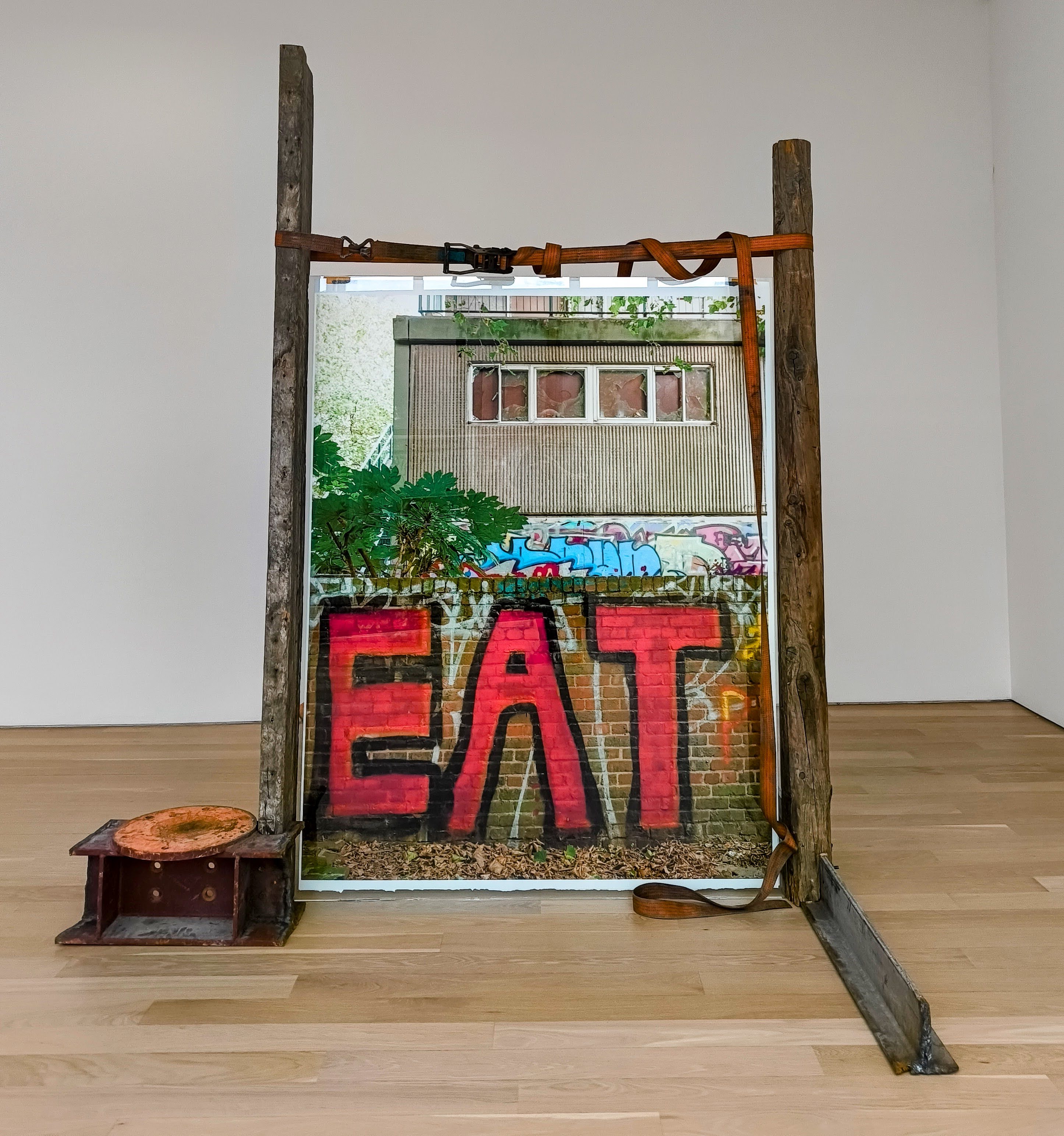
Life-size documentation, come sculptures, dominate the upper gallery. Interior and exterior scenes ubiquitous to run-down, concrete housing estates around the country are showcased and transformed into 3D works with Nelson’s scavenged and reused materials- providing a rich textural language of his own work alongside patinaed architectural features. Incongruous 80s arcade machines also form parts of these sculptures, the technology and aesthetic of these pieces not quite matching the decaying beauty of the wooden beams or the flaking deterioration of salvaged metal but a genre marker of an era none-the-less.
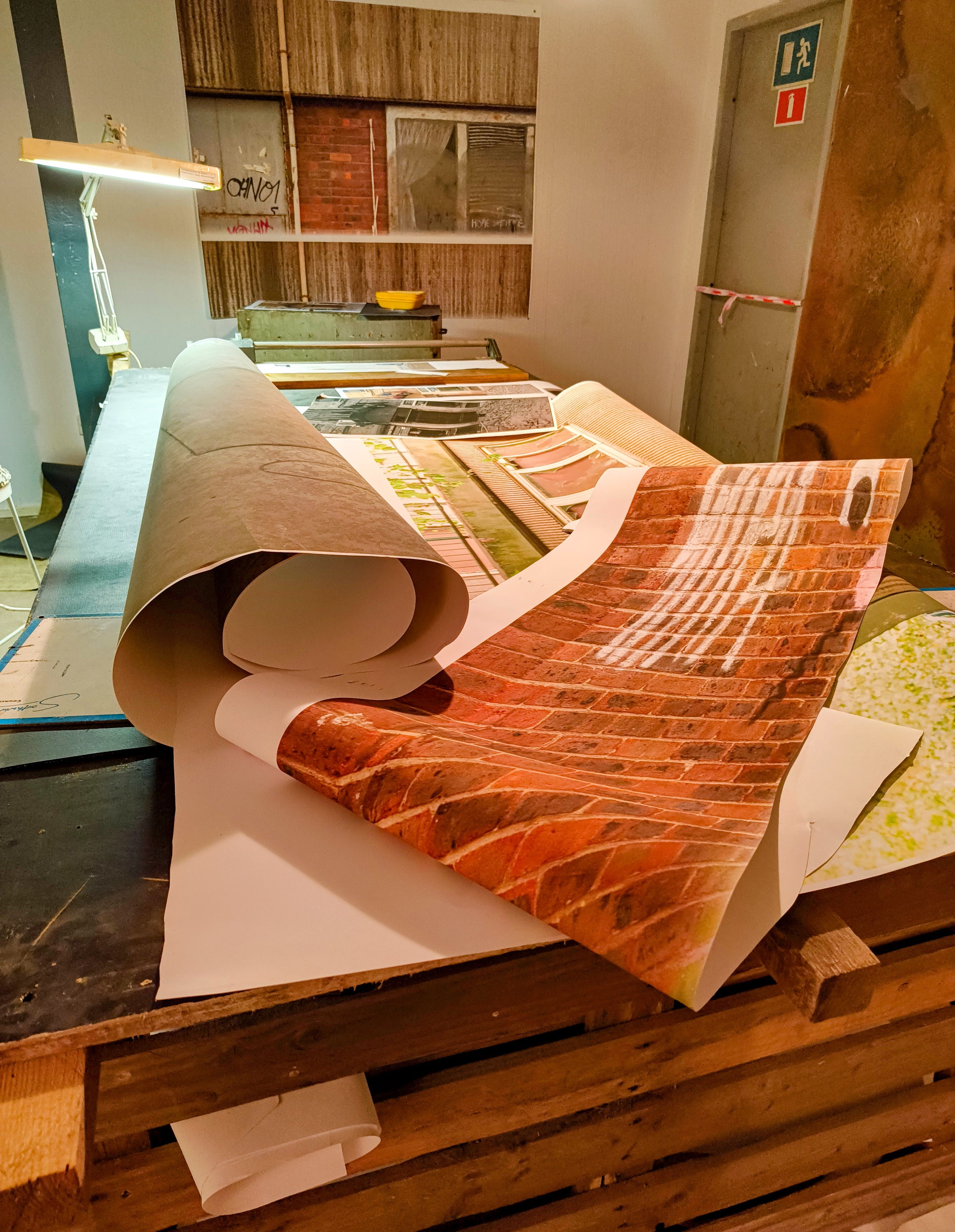
The scale of these works (printed on a machine, specifically sourced from the same era as the building) give them transportive powers. I feel like I could walk up the well-worn stairs, I almost feel the threadbare carpet underfoot, the invasive presence of beige- the tiles, the carpets, the wallpaper, the curtains- feels so recognisable I can almost hear the hiss of the open grill in my mum’s kitchen. I smell and could reach out to her infamous chip pan entombed in grease. Stepping into Nelson’s work is like inhabiting a memory and I am flooded with flashbacks of pink velour pyjamas and anaglypta wallpaper.
There is also a distinct evocation of wistfulness in this work. Stairs are embellished with festoons of work lights and torn lanterns from bygone celebrations. They are littered with evidence of lives lived: crisp packets, frayed t-shirts, chipped paintwork, fag-ends and mould. The guts have been ripped out and homes have been left to slowly die.
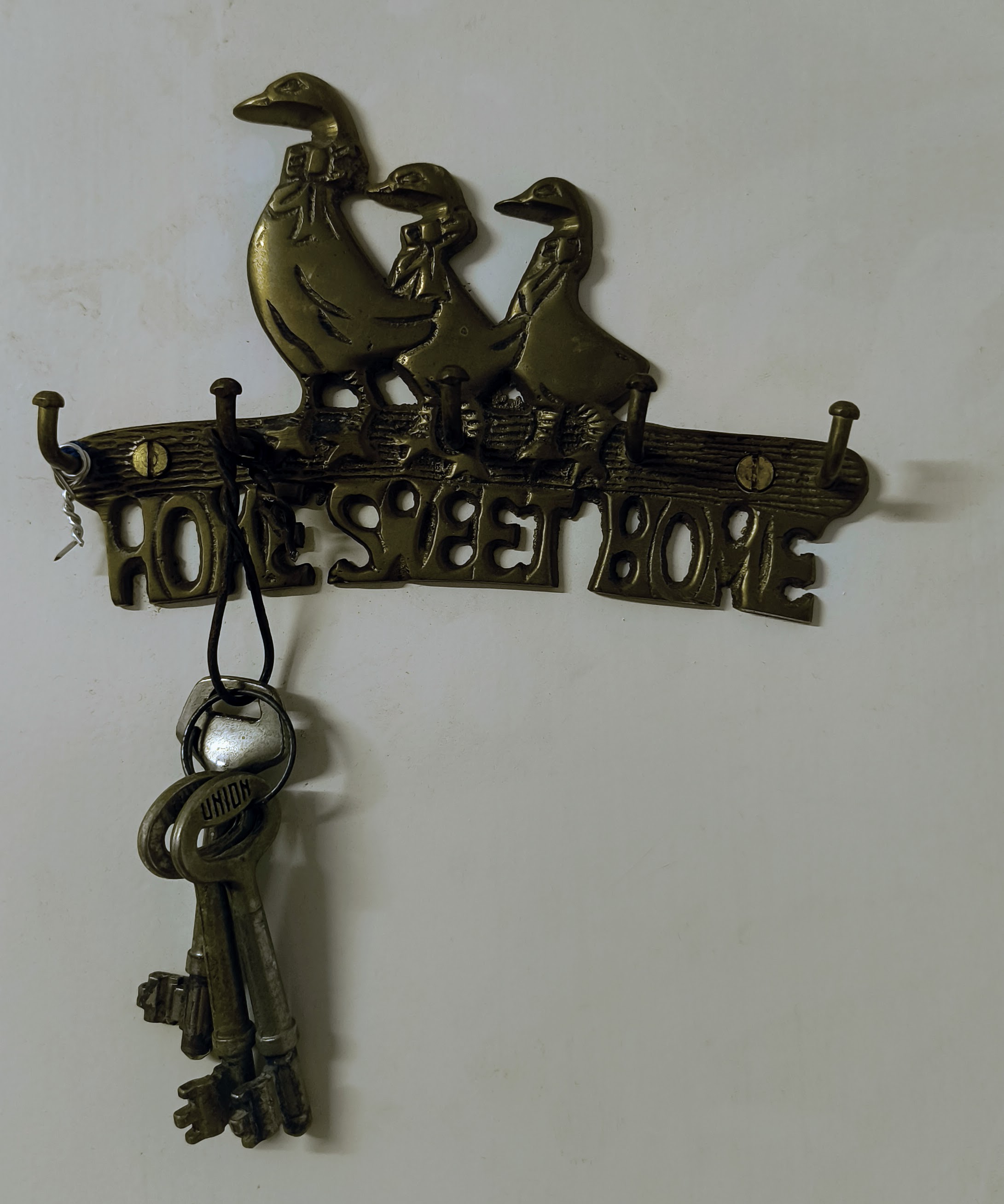
Continuing this mournful trip through Nelson’s exterior photos, the audience are invited to trespass through scrapyards of rusting hubcaps and abandoned garages. Ironic graffiti claiming this failed utopia as ‘Home Sweet Home’ jostles with the palpable coldness of the giant textured slabs used to hastily construct the tower blocks. We see behind the scenes of the concrete- in excavations of pipes and clipped electrical cables and the monstrous claw of a digger making way for ‘progress’.
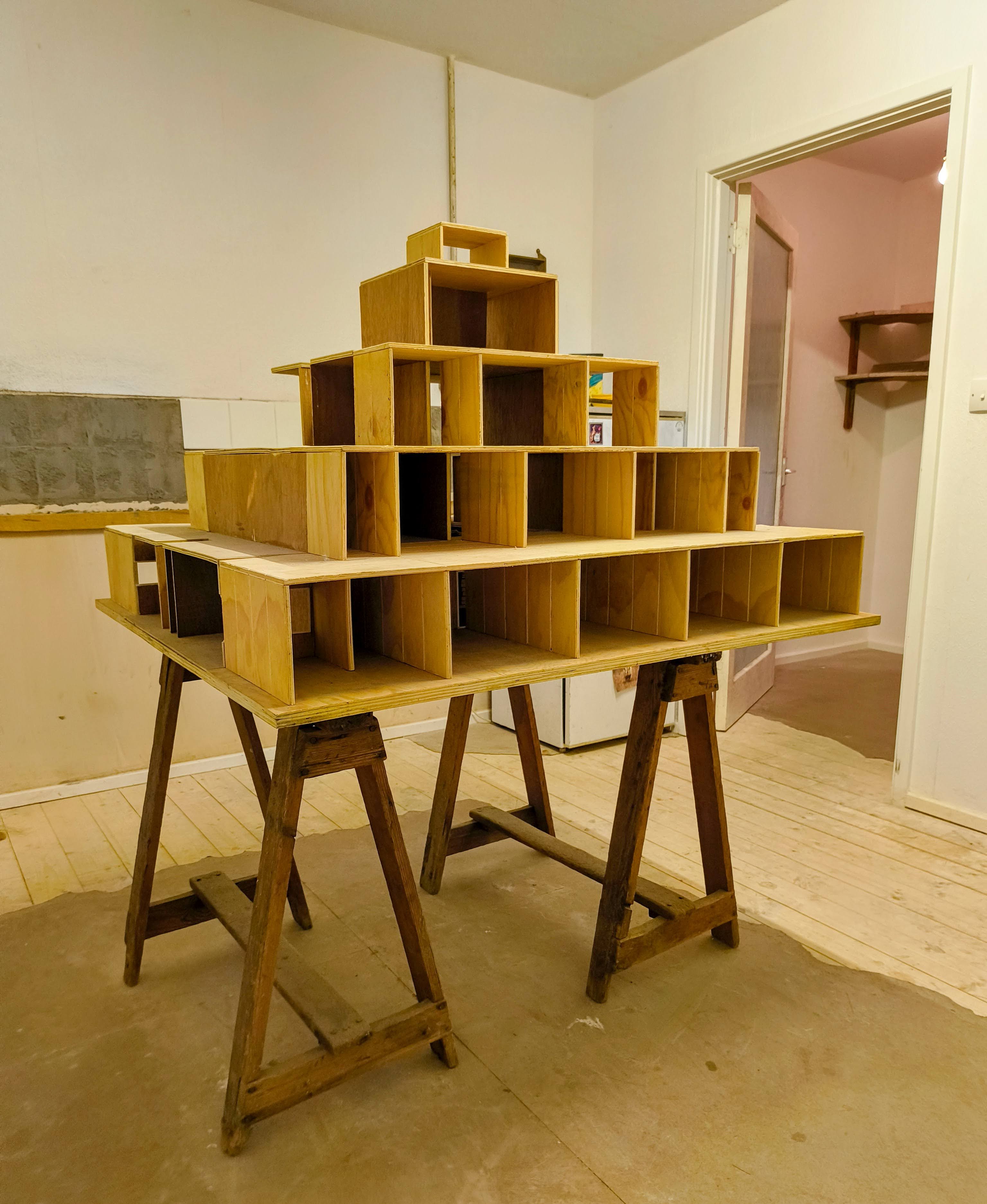
If these photos don’t help you inhabit council houses of the 70s, just make your way down to the warehouse where you can physically enter a scale replica of one of the flats Nelson visited. Despite it being a replica in shape and size Nelson has cobbled together this building and it’s contents from all corners of the earth. Suggesting perhaps that decay and entropy are a universal experience? Or just embracing the beauty and texture of found materials?
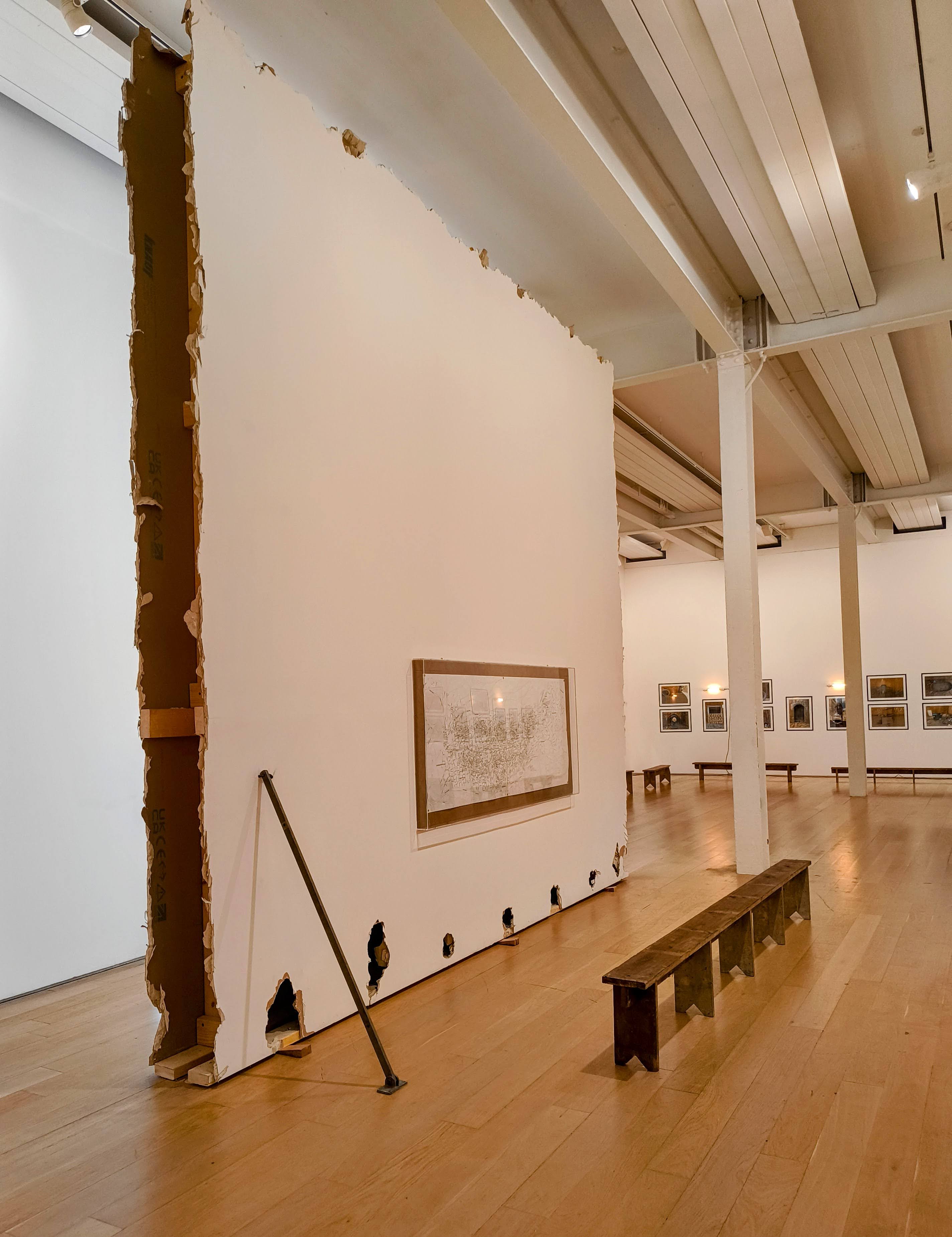
Apprehensively, I enter through an ominous metal security door (from New York), scrawled with graffiti tags, which creaks and then slams behind me. Instantly, I leave the gallery, and I am consumed by contrary feelings of both home and anxiety. The bones of the place creak as I explore the crumbling façade and damp innards of this building steeped in an melancholic fragility- it feels as if it could disintegrate at any moment. An unfettered harsh light from a bare-bulb and the flicker of a strip light highlight the Matrix-type glitch of this construction, of a construction, within a construction and expose a bookshelf cleared of life but layered in grime.
The shuffle of my feet on barren floorboards is the only sound in this seemingly deserted place which only serves to underline the feeling that I shouldn’t be here. I am witnessing something I shouldn’t, and it is both thrilling and terrifying.
The chipboard walls and chipped doors are laced with roses of mould, and the proverbial stench of damp concrete is pervasive as I try to readjust my vision to the darkness lingering through the kitchen window (from Nelson’s own house I’m told). An expansive building site of rubble and abandoned builder’s buckets surrounds the
About the author: Beth Cockerline is about to start the 2nd year of the HND Contemporary Art Practice at Edinburgh College. Edinburgh based writer, artist and teacher with a penchant for gender equality, feminism and promoting the rights of marginalised groups. Beth is also a member of the amazing hubCAP gallery in Granton.
The following review was first published by CAPetc… Year 1 student Beth Cockerline on her personal blog on 15th February 2025. We are delighted to re publish the post on the CAPetc… website.
Joan Snyder, exhibits her first retrospective in the UK with Theddeus Ropac. Covering Snyder’s 60 year career, a vicissitude of work explores abstract expressionism with a unique and spirited amalgamation of the autobiographical.
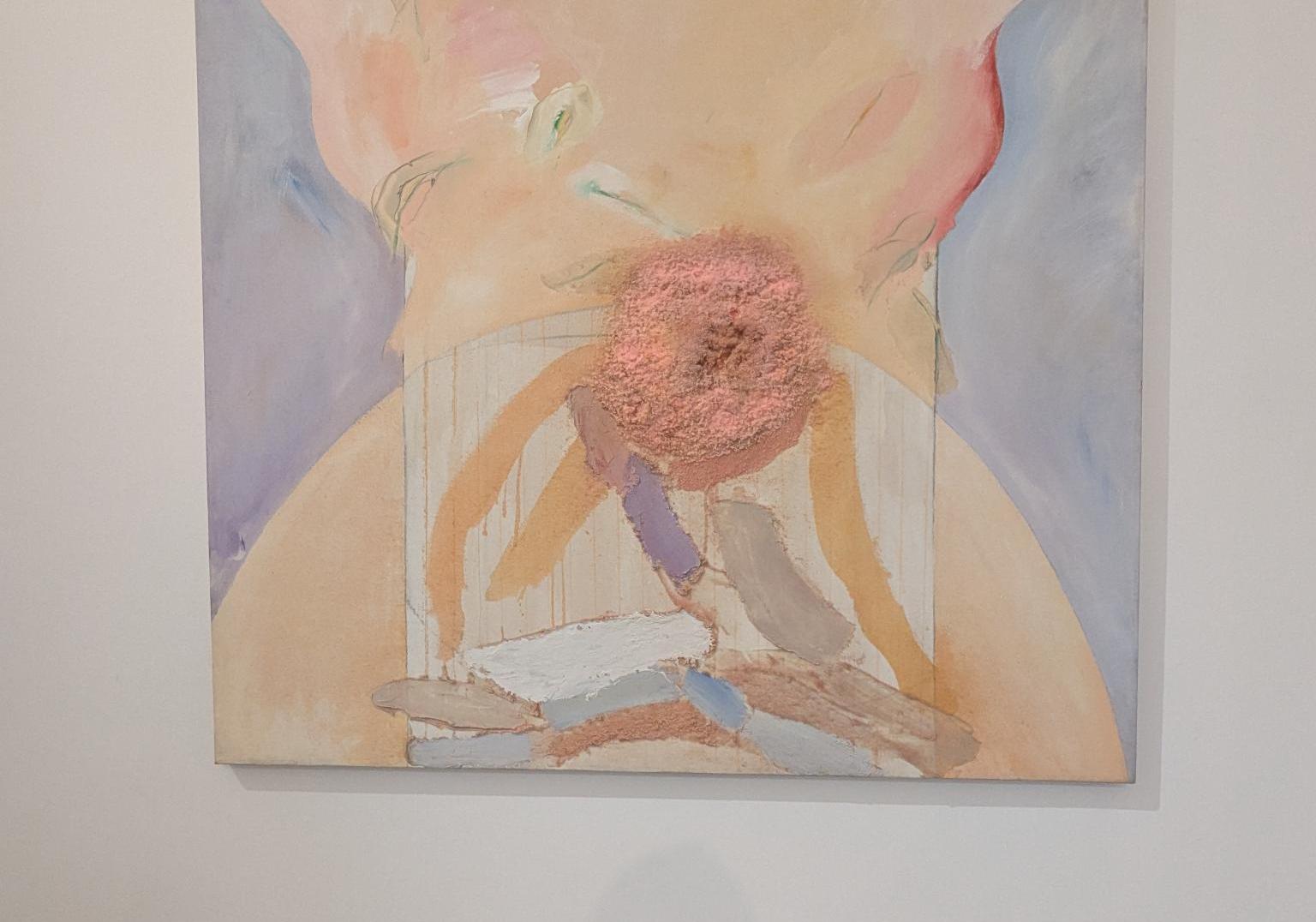
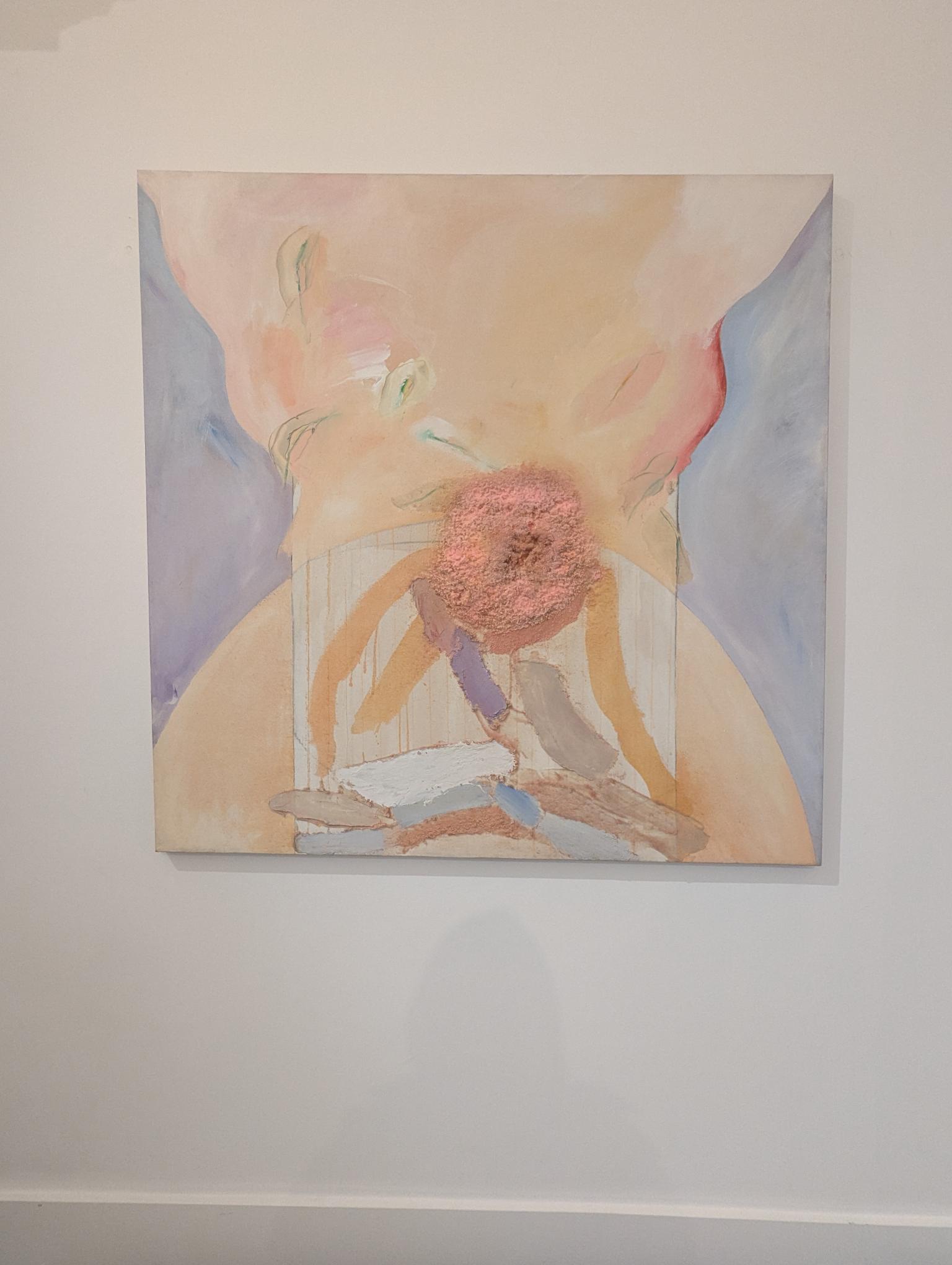
Fresh Flock Painting with Strokes and Stripes 1969
Facing the sweeping staircase, of the floodlit gallery, I was instantly drawn in by the light and ephemeral abstraction of Fresh Flock Painting with Strokes and Stripes 1969. On first appearance a delicate depiction of the female figure, Snyder’s joy of the flesh is palpable in a subtle blending of the paint to create form and structure. The flame hot pink of a wound reminds us of the vulnerability of the body and as the eye travels down the composition the hourglass figure appears emptied out: sharing every trauma and horror on the canvas. The flocking, a tactile, oozing wound or growth? A pulsating organ? A centrepiece reaching out to us from the violet blue background which floats the body in space celebrating all the agonies and beauty of the flesh.
Flanking this piece are two similarly sensitive works, recalling Frankenthalerian soak-staining (Veiled Strokes 1969) and an exciting, but economical use of impasto against glowing areas of pastel. Despite invoking elements of colour field from the likes of Rothko, Snyder highlights the singularity of her work in the intertwining of the autobiographical in her work: “It’s an undecipherable abstract language. It’s my language that is speaking and my soul that is being bared. It is my pleasure and pain…”
A Letter to My Female Friends, 1972, and other work of this period speak in a very distinctive language of truncated, heavy marks, cut off before they’ve had the chance to convey their full story; a stumble of stuttered utterances recounting an incomprehensible tale. In other works, Wild Strokes, Hope 1971, given more room to breathe and converse, the marks tell a more intriguing story: a marbled universe of dark blue enrobed in wax; a diversity of tone; a stain here, a splatter there; a lightness of pigment lifting the darker tones.
Summer Painter 1994
When Snyder experiments with more representational imagery, the work wanes. In, To Transcend/ The Moon 1985 fat glutenous ripples of pure black, white and peacock blue suffocate one half of the canvas while incongruous sweeps of astral gold and vertical graphic slices of cracked, deep purple, blue and green eclipse the other half.
However, exploring her later work Snyder returns to abstraction and a playfulness which is both joyful and experimental. It’s hard not to grin at the space age knobs and naivety of Summer Painter 1994 and in other works, Theddeus Ropac’s use of the architectural features, fully embrace and highlight the nuance of Snyder’s work.
The final room of the exhibition, and presentation of Snyder’s most recent work, is crammed with joyful abandon- a celebration of nature, experience and life! The recurring motif of the organic ‘pond’ is a dark abyss (Roses for Souls), a portal into another realm and a mystical lagoon luring unsuspecting viewers to a world inhabiting sirens (Come to the Pearl Pond). The energy and confidence of Snyder’s work is palpable and the use of collaged, 3D elements speaks to her earlier sculptural work. While the work can drift into the quaint and sentimental at times, it bounces back with gusto in Man Leaping- a rapturous and flamboyant triumph of freedom.
Body and Soul is an exquisite journey through Snyder’s oeuvre highlighting an energy and passion for the materiality and infinite possibilities of paint that is unequivocal.
Congratulations to Edinburgh College CAP Alumni Jenny Souter on the film she made in partnership with the Guardian, Screen Education Edinburgh (formely Video in Pilton) and the people of North Edinburgh.
Click on the image to watch the film on the Guardian Website.
Jenny’s connection to the area dates back to 2010 when she started studying at Edinburgh College’s Granton Campus. During her final year on CAP Jenny participated in “Local” a project we developed with the North Edinburgh History Group and North Edinburgh Arts Centre. The project began with meetings between our CAP 2 artist and the members of the history group who showed films, shared stories about the social history and activism of North Edinburgh and gave the students a guided tour of the area. In response the students made a range of creative responses which you can see in the post below from 2012.
The project came about through a chance encounter with legendary North Edinburgh activist Willie Black and a conversation about my own connections with North Edinburgh through my Granny Holligan and Uncle Charlie who remianed in the area until the start of the redevelopment in 2008/9. Willie played a key role in the entire project and it is great to see him feature in this new film.
Jenny’s response to the project 10yrs ago was aslo a very successful moving image work titled “Sysiphus” , below, which was developed in reaponse to archive footage of local women featured about the seemingly futile battle with the damp in their houses.
Jenny Souter: “Sysiphus” 2012
It is wonderful to see that 10yrs later Jenny has returned to the community and made this fantastic new film. We cant wait to see whats next!
Two Edinburgh College HND CAP students are getting ready to fly across Europe after being selected to take part in a prestigious contemporary art professional development opportunity in the Italian city of Venice this year.
HND Contemporary Art Practice students Chloe McHardy and Kirsten Grant have been selected to work at the Venice Biennale, a series of exhibitions curated around a specific theme representing the cream of global contemporary art.
This year there are 213 artists from 58 countries taking part which can be seen across the city of Venice from April to November and is one of the most prestigious cultural festivals in the world and a celebration of art and architecture.
Edinburgh College’s HND Contemporary Art Practice (CAP) course is celebrating the first year of a partnership with A-N (Artists Newsletter), The British Council, and Scotland + Venice, meaning two fully-funded places were available for CAP students to take part in Scotland + Venice’s Professional Development Plan.
After a competitive application process, Chloe and Kirsten were selected to be the first successful CAP recipients of this prestigious professional and career-defining development opportunity and will spend four weeks living and working in Venice.
During their time in Venice, Chloe and Kirsten will gain invaluable hands-on experience and will draw from the rigorous training programme they have already undertaken. This programme has included learning about the day-to-day running of a contemporary art gallery whilst working closely alongside Scotland’s representative artist Alberta Whittle.
Scotland + Venice was originally founded in 2003, identifying itself as distinct from the British Pavilion, a place that could celebrate the unique and independent space that Scotland has within the global Contemporary Art World.
Edinburgh College Art & Design lecturer Jennie Temple said: “The HND Contemporary Art Course is absolutely delighted that this partnership has been established and we celebrate the significant recognition from Scotland + Venice, the British Council and A-N that our students are rightfully valuable and highly capable contributors to the Professional Development Plan.
“The CAP course works continually hard to ensure that students are provided with a meaningful, appropriate, and active learning experience that sets solid foundations for both continuing education and working within the art industry. We are very proud of all of our students, and the work that both Chloe and Kirsten have put in to successfully achieving their well-earned places on Scotland + Venice’s PDP stands as testament not only to themselves but the course itself.
“Well done Chloe and Kirsten, we are incredibly proud of you, and we look forward to the CAP community benefiting from your first-hand experience and the ripples of your time in Venice reaching the distant shores of the Granton Campus in North Edinburgh in the coming months.”
Norah Campbell, Head of Arts, British Council Scotland, and Scotland + Venice partnership board member said: “The Scotland + Venice programme has had a hugely positive impact for those taking part over the years, and I’m sure this year will be no different. The invigilators will have a unique opportunity to build lasting global connections, grow their professional network, experience a vast range of contemporary art, and most importantly – to generate ideas for their own work and practise.”

 Contemporary Art Practice etc...