Mike Nelson Constructs A Eulogy to Entropy 

By Beth Cockerline CAPetc YR2. 1st publised by FAD magazine 14th Aug 2025

Entropy  

/ˈɛntrəpi/  

Noun 

1. a measurement of the energy in a system or process that is not available to do work 1 

2. lack of order or predictability; gradual decline into disorder. 
“The crucial thing about entropy- it always increases over time. It is the natural tendency of things to lose order. Left to its own devices, life will always become less structured. Sandcastles get washed away. Weeds overtake gardens”  2  

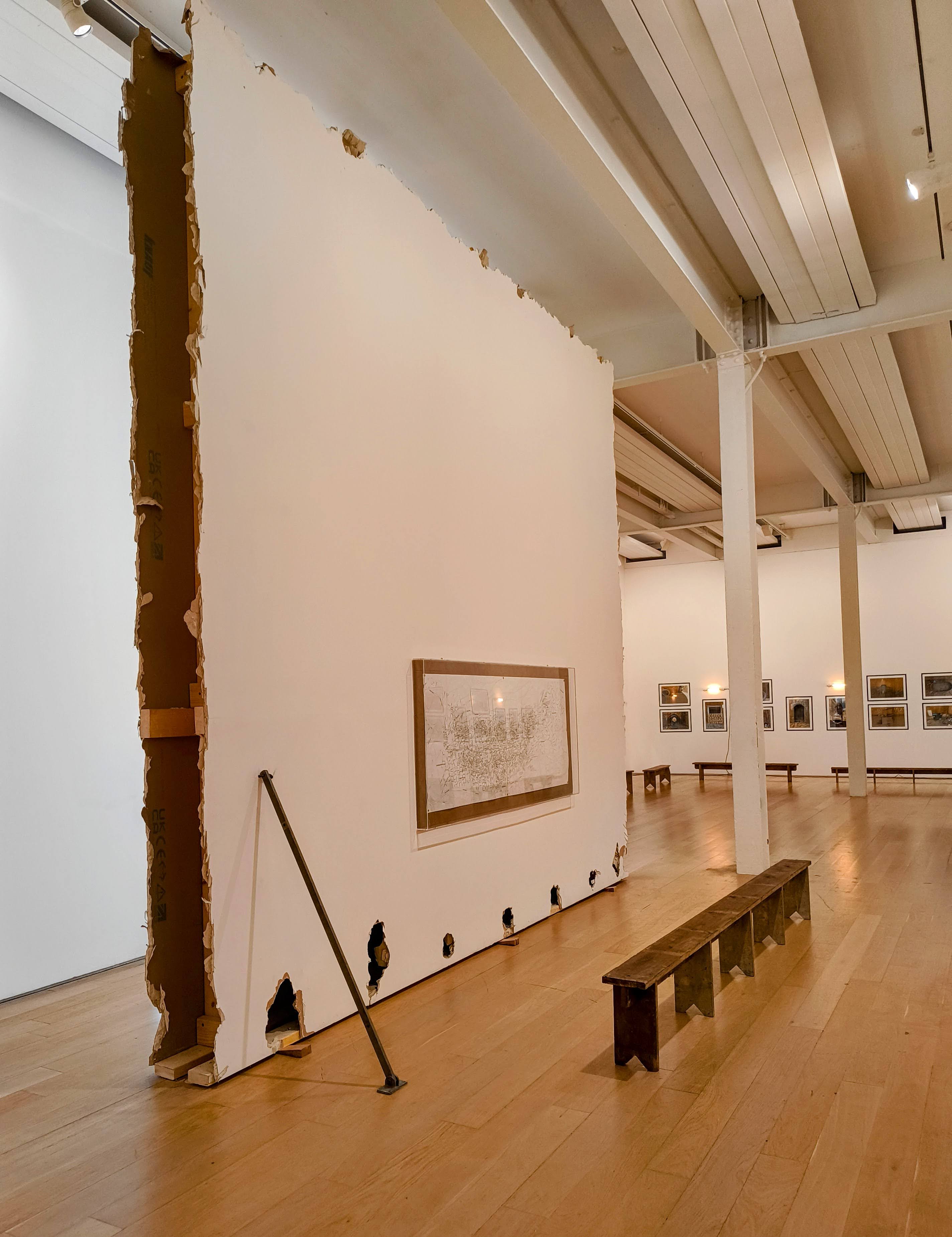
In this unprecedented time of change and turmoil perhaps we need to embrace entropy? Perhaps we need to pause and let things be washed away, slow down and let the weeds take over? Synonymous with immersive installations, Mike Nelson recently spent two months in homage to this decay; in an act of service and love to the entropy of a block of South London flats. In a “reverse DIY”3 feat, Nelson has created a hauntingly familiar work, Humpty Dumpty, a transient history of Mardin earthworks, low rise, at Fruitmarket gallery in Edinburgh. The exhibit, which coincides with Edinburgh Arts Festival, then comes full circle and counters with the inquisitive exploration of the rebirth of a South-Eastern Turkish city, Mardin. 

 If you grew up in the 70s-90s, in a British council house, Low Tide is akin to attending the funeral of a former life. I’d suggest you start your journey here,  in the upper gallery and Warehouse, where Nelson sensitively captures the gritty detail with nostalgic reminiscence, of the now extinct, Heygate Estate, through photography, sculpture and installation. 

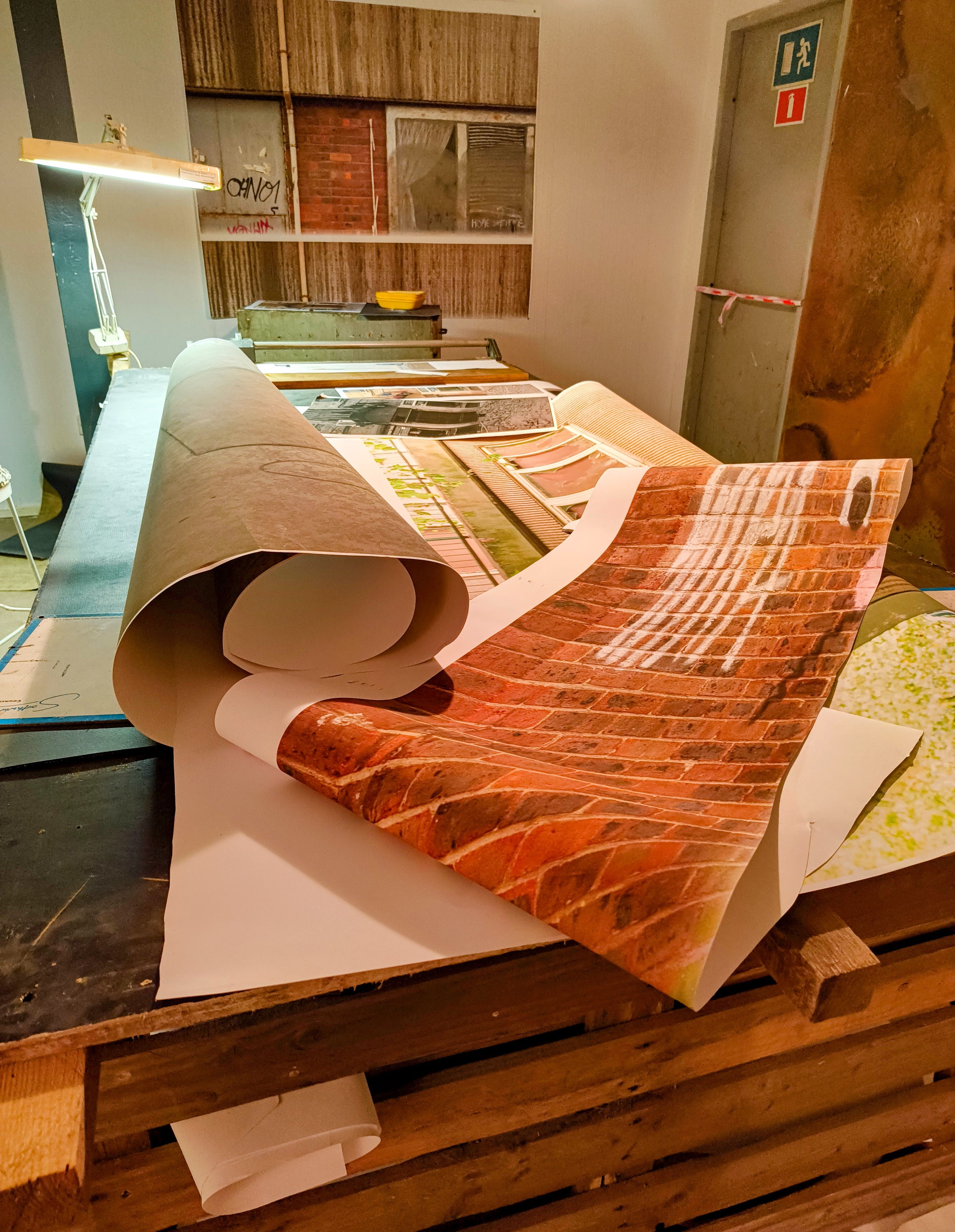
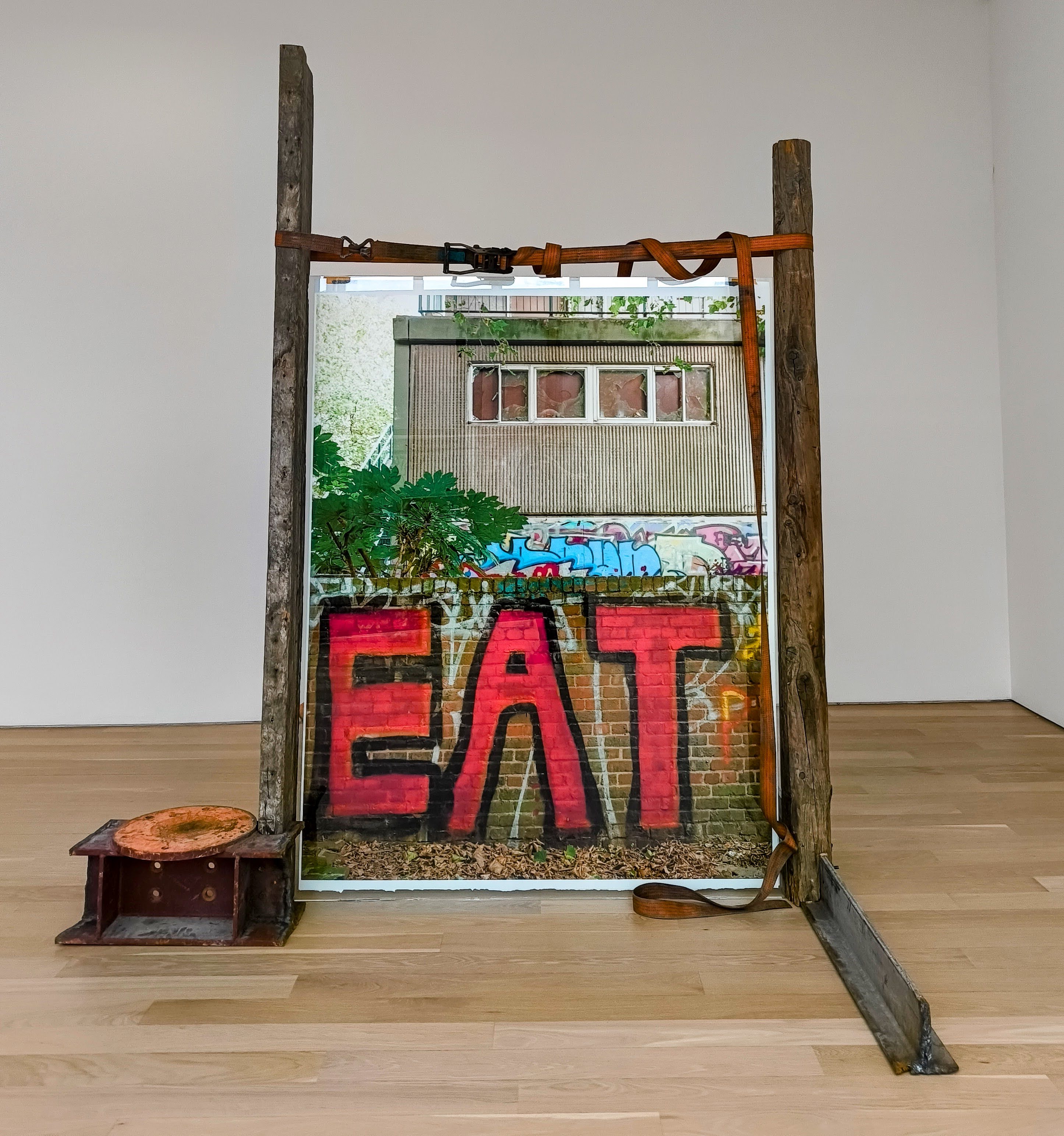
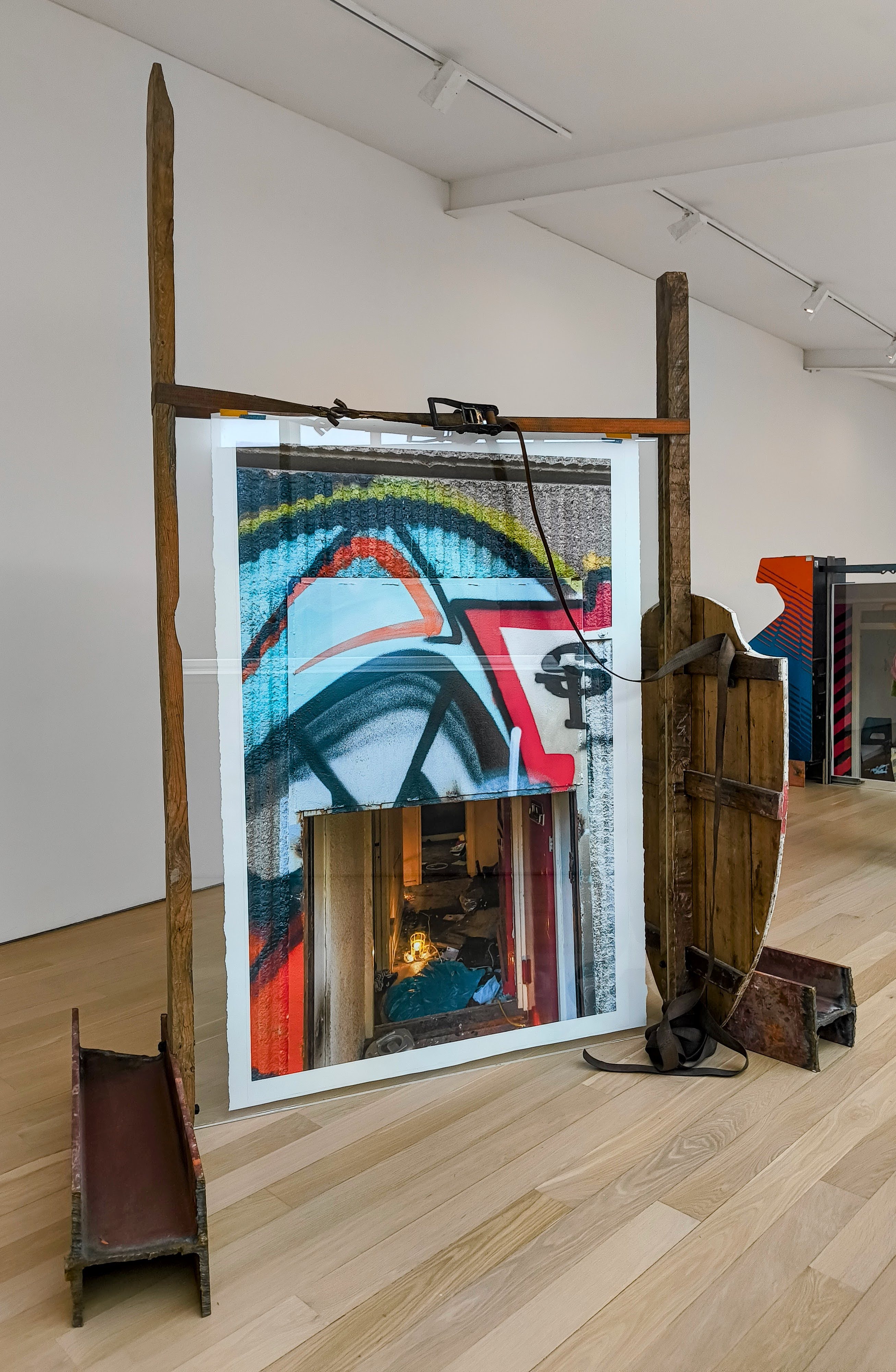
Life-size documentation, come sculptures, dominate the upper gallery. Interior and exterior scenes ubiquitous to run-down, concrete housing estates around the country are showcased and transformed into 3D works with Nelson’s scavenged and reused materials- providing a rich textural language of his own work alongside patinaed architectural features. Incongruous 80s arcade machines also form parts of these sculptures, the technology and aesthetic of these pieces not quite matching the decaying beauty of the wooden beams or the flaking deterioration of salvaged metal but a genre marker of an era none-the-less.   

The scale of these works (printed on a machine, specifically sourced from the same era as the building) give them transportive powers. I feel like I could walk up the well-worn stairs, I almost feel the threadbare carpet underfoot, the invasive presence of beige- the tiles, the carpets, the wallpaper, the curtains- feels so recognisable I can almost hear the hiss of the open grill in my mum’s kitchen.  I smell and could reach out to her infamous chip pan entombed in grease. Stepping into Nelson’s work is like inhabiting a memory and I am flooded with flashbacks of pink velour pyjamas and anaglypta wallpaper.  

There is also a distinct evocation of wistfulness in this work. Stairs are embellished with festoons of work lights and torn lanterns from bygone celebrations. They are littered with evidence of lives lived: crisp packets, frayed t-shirts, chipped paintwork, fag-ends and mould. The guts have been ripped out and homes have been left to slowly die.  

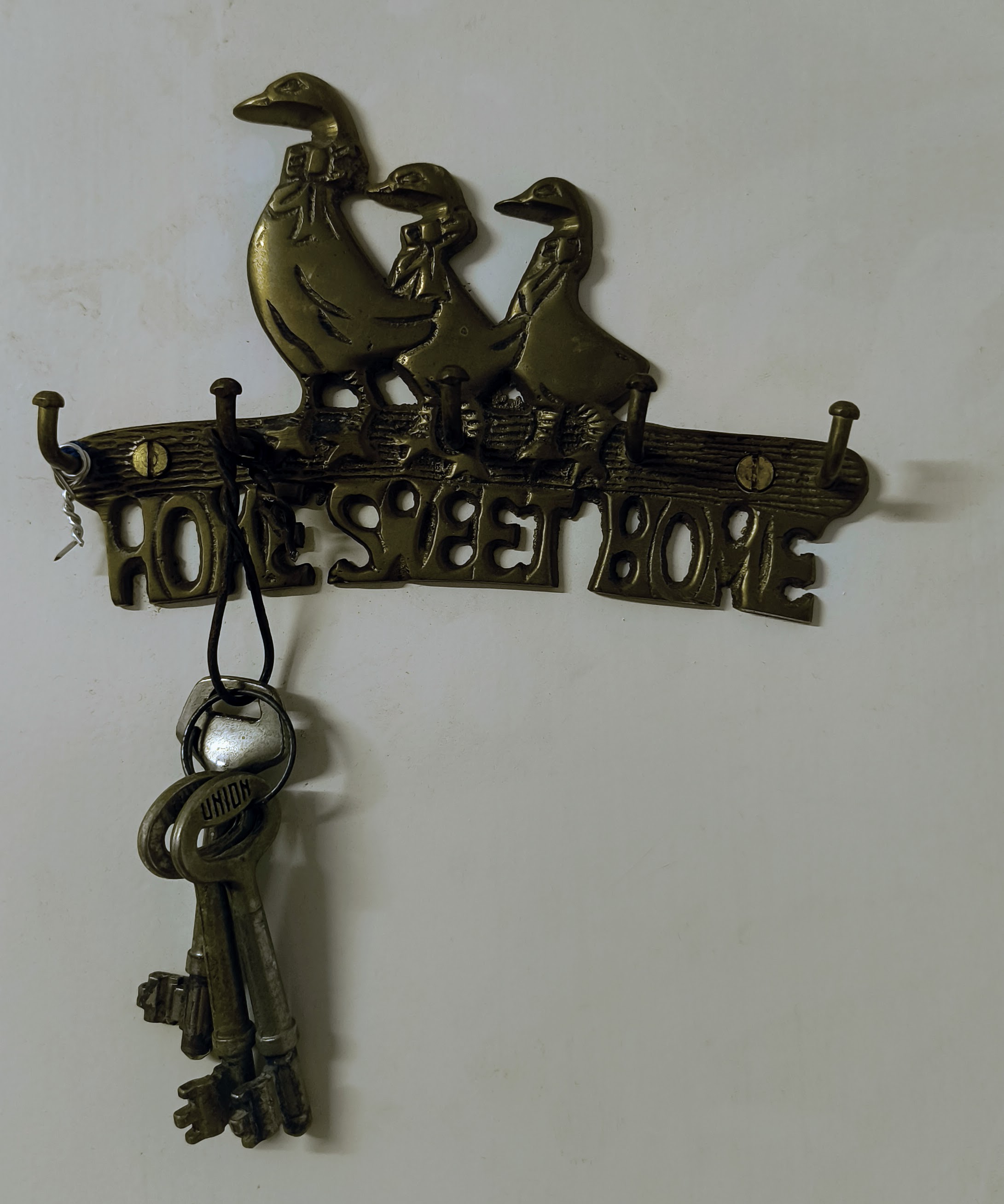
Continuing this mournful trip through Nelson’s exterior photos, the audience are invited to trespass through scrapyards of rusting hubcaps and abandoned garages. Ironic graffiti claiming this failed utopia as ‘Home Sweet Home’ jostles with the palpable coldness of the giant textured slabs used to hastily construct the tower blocks. We see behind the scenes of the concrete- in excavations of pipes and clipped electrical cables and the monstrous claw of a digger making way for ‘progress’. 

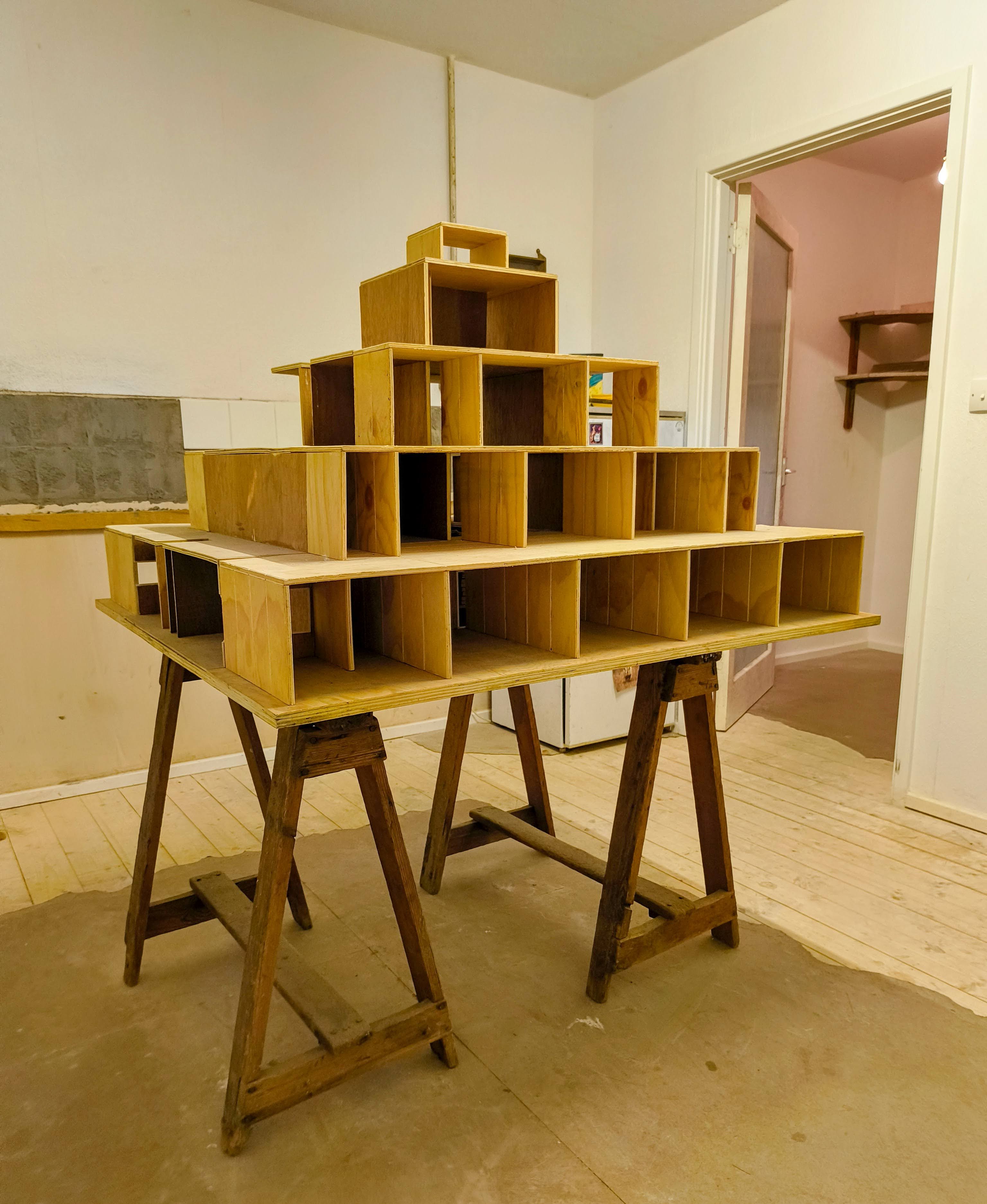
If these photos don’t help you inhabit council houses of the 70s, just make your way down to the warehouse where you can physically enter a scale replica of one of the flats Nelson visited. Despite it being a replica in shape and size Nelson has cobbled together this building and it’s contents from all corners of the earth. Suggesting perhaps that decay and entropy are a universal experience? Or just embracing the beauty and texture of found materials? 
Apprehensively, I enter through an ominous metal security door (from New York), scrawled with graffiti tags, which creaks and then slams behind me. Instantly, I leave the gallery, and I am consumed by contrary feelings of both home and anxiety. The bones of the place creak as I explore the crumbling façade and damp innards of this building steeped in an melancholic fragility- it feels as if it could disintegrate at any moment. An unfettered harsh light from a bare-bulb and the flicker of a strip light highlight the Matrix-type glitch of this construction, of a construction, within a construction and expose a bookshelf cleared of life but layered in grime. 

The shuffle of my feet on barren floorboards is the only sound in this seemingly deserted place which only serves to underline the feeling that I shouldn’t be here. I am witnessing something I shouldn’t, and it is both thrilling and terrifying.  

The chipboard walls and chipped doors are laced with roses of mould, and the proverbial stench of damp concrete is pervasive as I try to readjust my vision to the darkness lingering through the kitchen window (from Nelson’s own house I’m told). An expansive building site of rubble and abandoned builder’s buckets surrounds the

About the author: Beth Cockerline is about to start the 2nd year of the HND Contemporary Art Practice at Edinburgh College. Edinburgh based writer, artist and teacher with a penchant for gender equality, feminism and promoting the rights of marginalised groups. Beth is also a member of the amazing hubCAP gallery in Granton.
Modern Edinburgh Film School & HND Contemporary Art Practice Link up

Guest blogger Alex Hetherington presents: Modern Edinburgh Film School

Alex Hetherington Modern 1    Alex Hetherington Modern 5    Alex Hetherington Modern 3    Alex Hetherington Modern 4

Images Courtesy of Alex Hetherington: Modern Edinburgh Film School

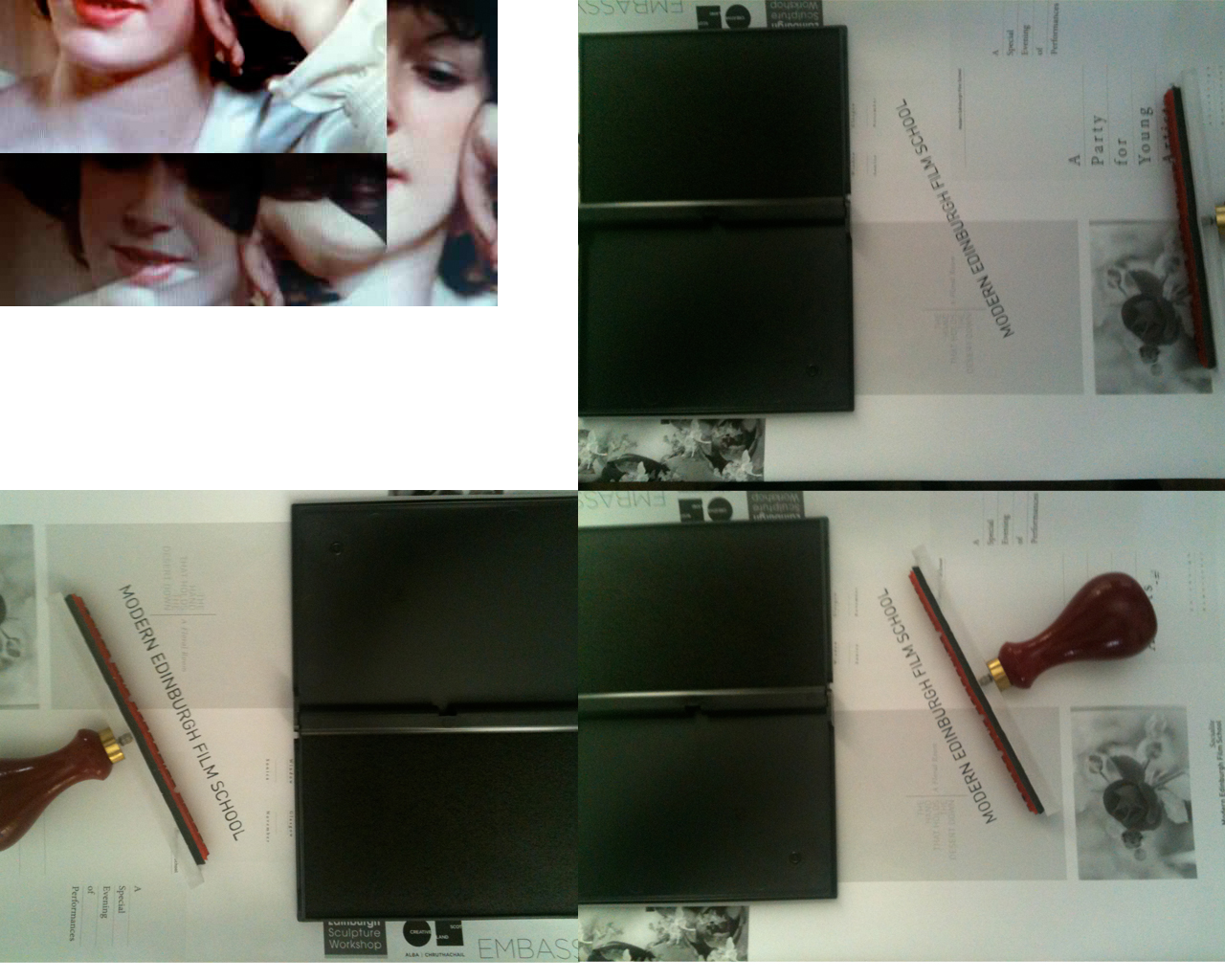
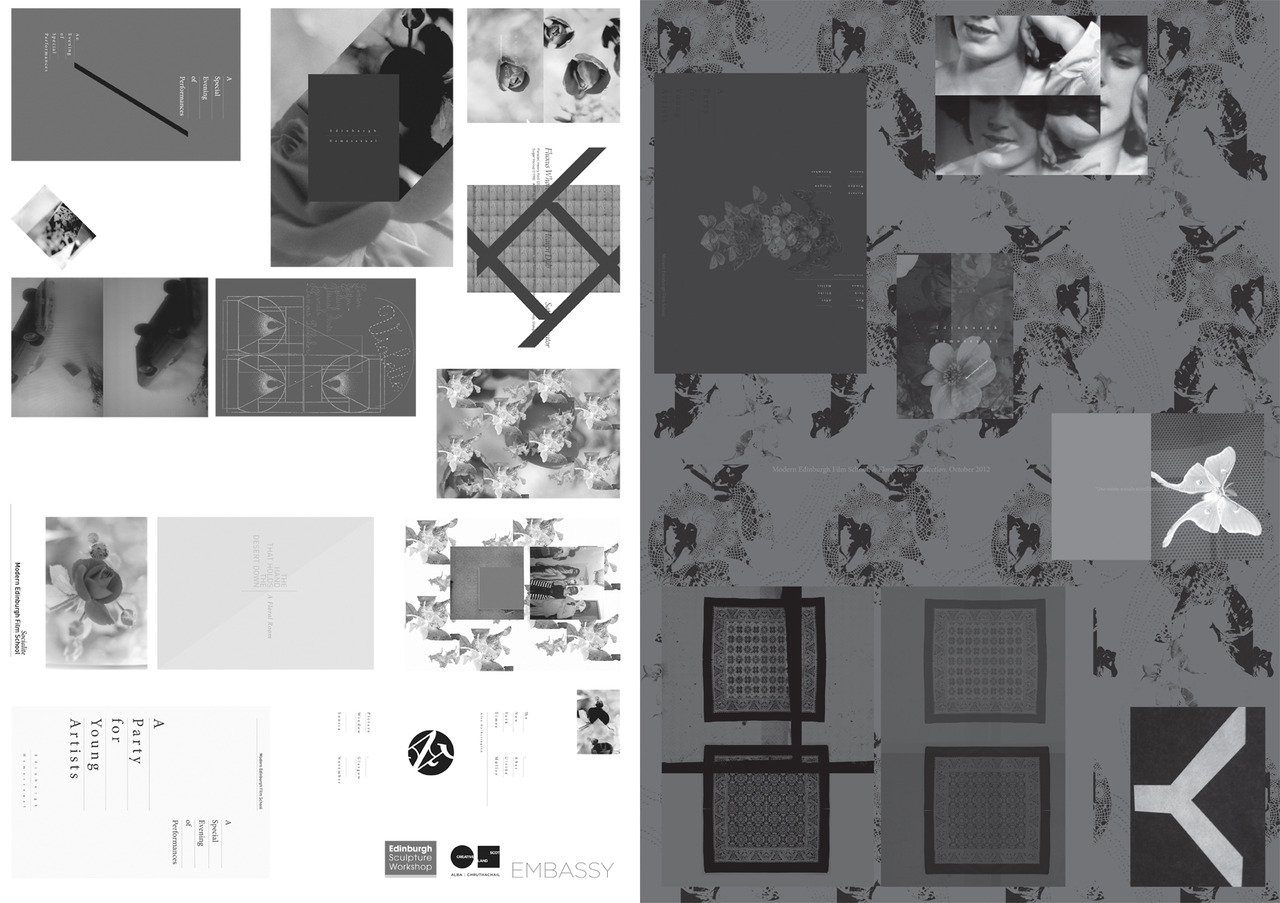
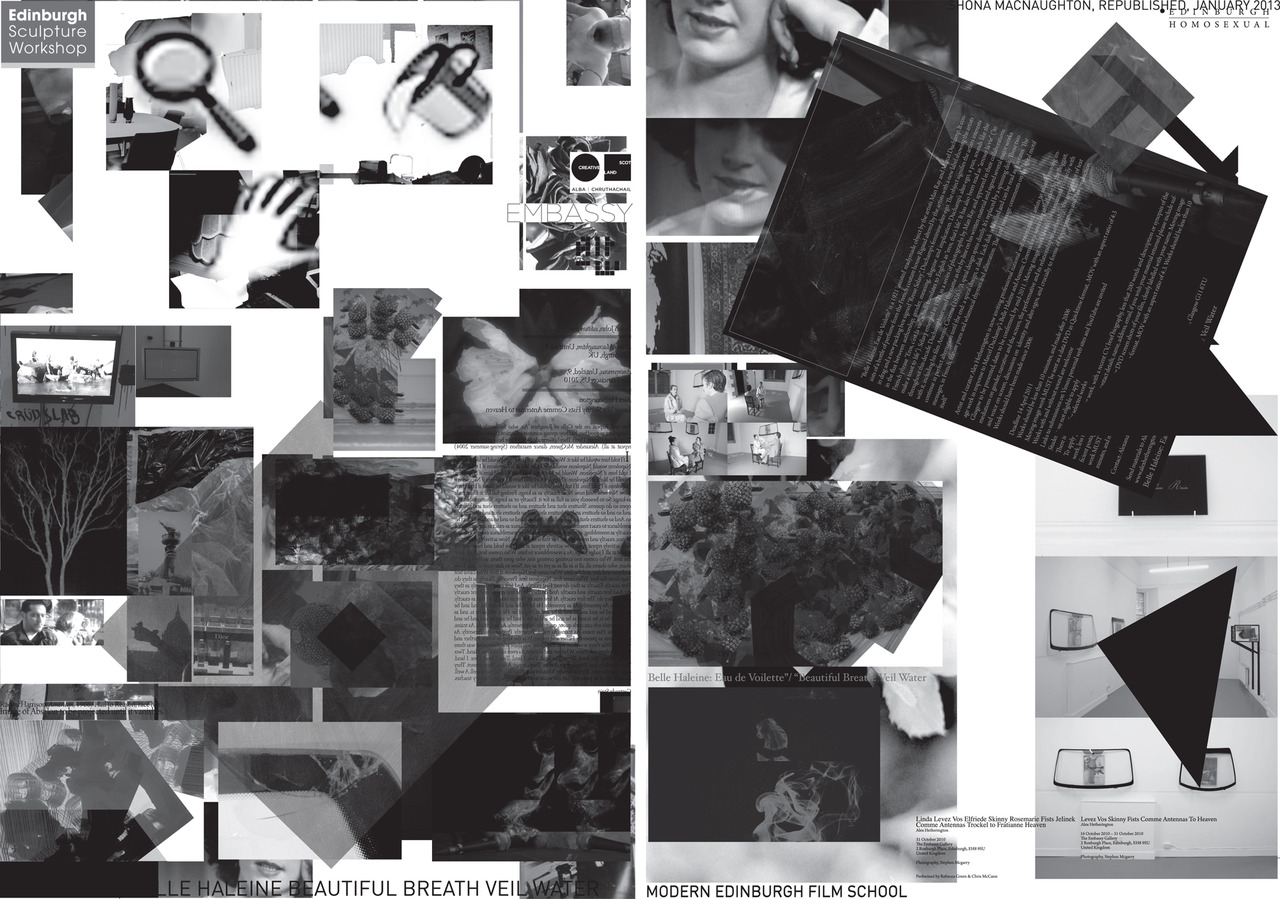
Modern Edinburgh Film School – a temporary participatory film school, combining themes of the sculptural screen, film and poetry, narrative and space, event as image, and acoustics and noise as form – is curated by the visual artist Alex Hetherington in association with Edinburgh Sculpture Workshop.

It acts as a kind of prism, reflecting, connected and transparent surfaces – where one thing can be seen through another – on the activities, functions and architecture of the Sculpture Workshop’s

new building and outward to contexts, processes and activities externally, as satellite disparate engagements. It is informed by propositions and practices by a range of national and international artists demonstrating concerns between improvisational, meticulous and sensitively drawn associations in poetry, film, moving image, space and sculpture. It hopes to work as a season of projects, appearing and disappearing, being seen discreetly, at spaces and venues across the city in 2013.

Its propositions, which are elusive and allusive include a series of essays, of indicators of historical and contemporary activity, a slight curriculum: Edgar Schmitz, Anne Colvin, AA Bronson, Tom Marioni, Trisha Donnelly, Samantha Donnelly, Rachel Harrison, Martin Kippenberger, Harry Everett Smith, Marcel Broodthaers & Aurélien Froment and traits found in contributors, influencers and cameos such as Stephen Sutcliffe, Anthony Schrag, Anne Colvin, Lyndsay Mann, Hazel France, Sarah Forrest, Ute Aurand, Sarah Neely, Lauren Gault, Debi Banerjee, Benjamin Fallon, Zoë Fothergill,  Raydale Dower, and others.

The project, meanwhile is informed by the free school, and alternative learning approaches, inhabiting an arc of combined themes of the sculptural screen, film and poetry, narrative and space, event as image, and acoustics and noise as form. Education here becomes an obstacle, articulating thoughts on commitment, graduation, qualification and drifting attention, and the possibilities of promiscuous coincidences, synchronicity.  Meanwhile it contains two considerations of time, Modern and School, and the meanings of those in abrasion to a city with faint film vocabularies, traditions, establishment and authority and museums. In turn it contains thoughts on exhibitions, fictions and contrivances: outputs, alongside the essays are, transparent letter texts on black glass (solid film credits), zines and print, and a series of events and talks: Green Screen, Group Show, A Party for Young Artists, Edinburgh Homosexual, The Hand that Holds The Desert Down, A Library.

From the outset the School sought practitioners from different stages of their careers, including students in formal education, as well as those working at a professional level in contemporary art. After an open discussion on the work, and its ambitions, at Contemporary Art Practice at Edinburgh College and an open call, that followed  the conventions of applying for work in that professional setting: 4 images, statement and moving image samples,  two practitioners were identified to become part of the project, to attend works, and respond finally with a time-based submission for a portmanteau film for a screening at Edinburgh Sculpture Workshop’s appearance at the Edinburgh Art Festival in August 2013.

All the applicants in this process responded to different aspects of the shaping of Modern Edinburgh Film School, some revealing questions on the political status of such an undertaking, others looking at the subject of the poetic and the sublime, how literature and words give potent expression to filmmaking, how the digital might inform the sculptural.

The two successful candidates are Shareen Sorour and Kaitlyn Walker-Stewart whose applications both alluded to the symmetries, echoes and architectures of film, poetry and sculpture, while containing experimental and diverse approaches to the screen, the performative, time, the object, surface and representation. While still very early stage visual art practitioners their portfolios contain intriguing enquiries.

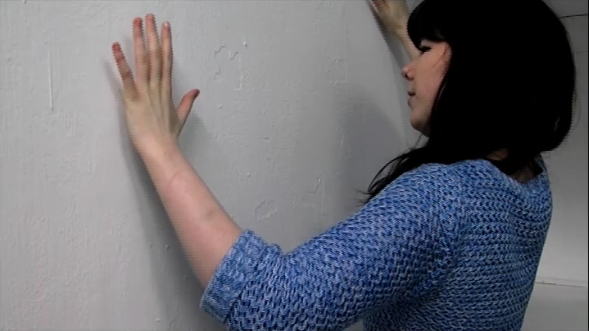
Shareen Sarour- Inside - Outside     Kaitlyn Walker-Stewart

Sharren Sarour: Outside: Inside; Still from Video.                 Kaitlyn Walker-Stewart: Barriers; Still from video

Modern Edinburgh Film School commences 15 March with a screening at Edinburgh Sculpture Workshop and a group show, Green Screen, co-curated with Embassy, followed there by performances and talks during March, and later a discussion on this collaboration at Edinburgh College of Art.

I would like to thank Alan Holligan, Jennie Temple and Colette Woods at Edinburgh College for their continued generous support of my practice in general and the work to be carried out for Modern Edinburgh Film School in particular.

Alex Hetherington, Edinburgh, February 2013.

Come to ART LATE – The CITY WIDE end of Festival Party

Edinburgh Art Festival would like to invite you to Art Late, our city-wide end of Festival party. It’s the ultimate opportunity to celebrate Edinburgh’s incredible visual arts scene, and it won’t cost you a bean.

The night begins at 6pm at the Ingleby Gallery with a collaborative performance from musician Wounded Knee and dancer Ianthe Wright. Later, two contrasting tours will set out from the gallery leading people round the Festival offering different experiences of the exhibitions: The Giving Tour and the Blank Canvas Bike Tour.

The ‘Spin Tour’ will set out from Talbot Rice Gallery at 6pm and is a personal introduction to exhibitions open as part of ART LATE. There’s also a live reading by Phil Kay, printmaking demonstration, artists’ performances and an exploration of the underbelly of Edinburgh’s infamous historical episodes.

If you are feeling independent, and would rather follow your own muse, there are 18 galleries open that evening for you to explore at your leisure.

ART LATE culminates at 9.30pm with Smoke – a collaborative work by local artists to create a night of music, performance and nicotine at niteclub Electric Circus on Market Street.

It’s going to be great. You can find out all about it here:

http://www.edinburghartfestival.com/09-festival-programme/events/art-late/

Book your place and download your e-ticket. The ticket gets you entry to all Art Late venues, and without it you can’t come in!

We hope you get the chance to join us for one final night of festival fun to draw to a close the 2009 Edinburgh Art Festival.

Edinburgh Art Festival is no damp squib.

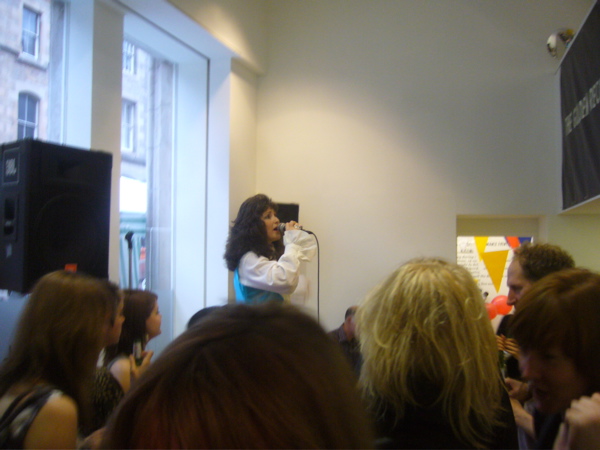
Rain couldn’t stop play last night as the Edinburgh Art Festival (EAF) officially launched with a decidedly damp street party in the heart of the capital. Among the beer, burgers, ice cream vans and a rather wonderful reincarnation of Karen Carpenter; the great, the good and the nicht so gut, of the Edinburgh art scene took turn in shaking off their umbrellas in the doorways of the Collective, Stills and Fruitmarket Galleries before re-deploying them for the journey through Advocates Close.

Now in its 5th year the festival offers another ambitious programme of more than 130 contemporary visual art exhibitions and events throughout the cities museums, galleries and temporary spaces. This years festival features established artists including Tracy Emin and Richard Hamilton as well as emerging talents from around the world.

Throughout the coming month contemporaryartetc… will bring you news and views from the festival. We would also welcome your contributions written or visual. If you would like to submit images or text please send them to:

contemporaryartetc@googlemail.com

you can also leave comments on any of our posts.

Regards

ED.

www.edinburghartfestival.org